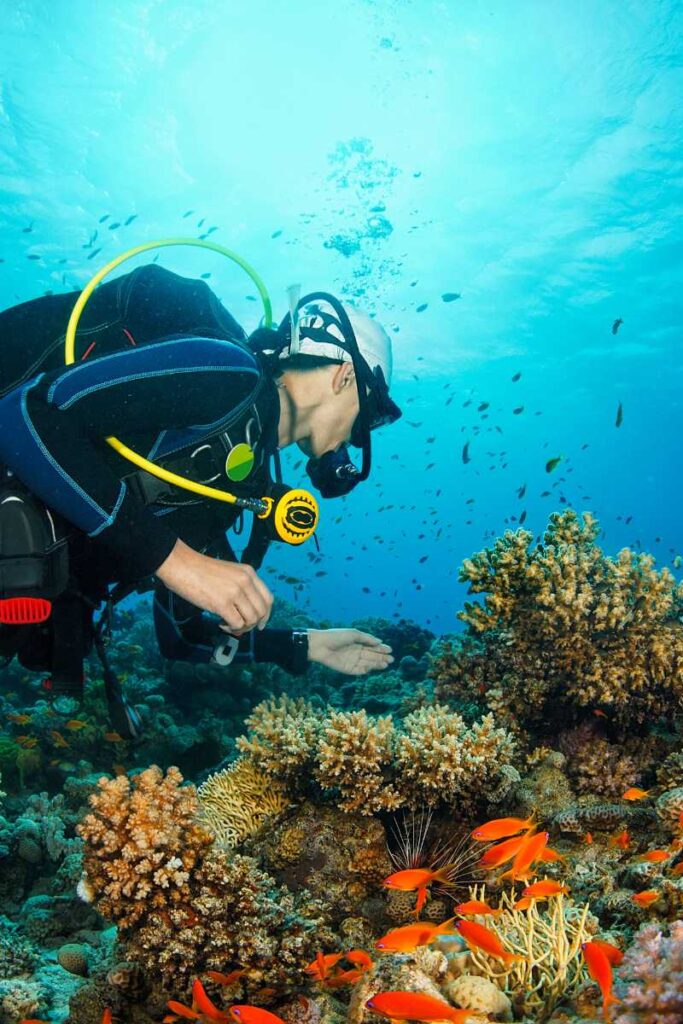
A dive center may operate at ten, twenty, or even fifty different dive sites.
Yet many dive websites describe all of them in one short paragraph:
“We dive beautiful reefs with turtles, rays, colorful fish and excellent visibility.”
That approach wastes one of the strongest SEO opportunities available to a dive business.
Every dive site has its own:
- Name
- Location
- Depth
- Marine life
- Conditions
- Skill requirements
- Topography
- Seasonality
- Search demand
Those differences can support individual dive site SEO pages that help a website rank for more specific searches while giving divers the information they need before choosing a trip.
Someone researching:
“Palancar Reef diving”
has different intent from someone searching:
“scuba diving Cozumel.”
The first diver may already know the destination and is now comparing specific sites.
That visitor is much closer to booking.
A strong dive site page should therefore do two jobs:
Build topical authority around the destination.
and
Move the visitor toward the right dive product.
The page should not end after describing the reef.
It should connect naturally to:
- Dive trips
- Certification requirements
- Packages
- Availability
- Guides
- Related dive sites
That is how dive site content becomes part of the booking system rather than simply a digital encyclopedia.
What Are Dive Site SEO Pages?
Dive site SEO pages are dedicated website pages built around individual scuba diving locations.
Examples might include:
- Palancar Caves
- Columbia Reef
- Santa Rosa Wall
- Dos Ojos
- The Pit
- Cenote Angelita
- Molasses Reef
- SS Thistlegorm
Each page focuses on one specific site.
A good page explains:
- Where it is
- What type of dive it offers
- Depth
- Conditions
- Marine life
- Skill level
- Best season
- What makes it different
- How to dive it with your operation
This creates a much stronger user experience than placing dozens of dive sites inside one long list.
Why Dive Site Pages Are Valuable for SEO
Dive destinations generate many layers of search demand.
A traveler may first search:
scuba diving Mexico
Then:
best diving Riviera Maya
Then:
cenote diving Tulum
Then:
The Pit cenote diving
As the search becomes more specific, the traveler becomes more informed and often closer to purchasing.
A dive center can create pages matching each stage.
| Search Level | Example | Best Page |
|---|---|---|
| Country | scuba diving Mexico | Country/destination guide |
| Region | diving Riviera Maya | Regional page |
| Activity | cenote diving Tulum | Service/destination page |
| Dive site | The Pit cenote diving | Dive site page |
| Commercial | book The Pit dive | Trip/booking page |
This creates a clear SEO architecture.
Dive Site SEO Pages Build Topical Authority
Search visibility is rarely built from one page alone.
A dive center that wants to become a strong resource about diving in Cozumel, for example, could create:
Scuba Diving in Cozumel
↓
Cozumel Dive Sites
↓
Individual pages for:
- Palancar Gardens
- Palancar Caves
- Santa Rosa Wall
- Columbia Reef
- Punta Sur
- Paradise Reef
These pages support one another.
Together, they demonstrate that the website contains substantial information about diving in the destination.
This is much stronger than having one generic page containing a list of twenty reef names.
Dive Site Pages Also Improve the User Experience
Divers often research specific sites before arriving.
They want to know:
- Is this dive appropriate for me?
- How deep is it?
- Is there current?
- What might I see?
- Is it a wall, reef, wreck or cenote?
- Do I need Advanced certification?
- Is Nitrox useful?
- Is it good for photography?
- How long is the boat ride?
- Can beginners dive there?
A good dive site page answers these questions.
That builds confidence before the diver contacts the shop.
Search Intent Should Determine the Page Structure
A dive site page is not only informational.
The user may be evaluating whether they want to dive that site.
That means the page should combine:
information
with
commercial next steps.
A useful flow might be:
- What the dive site is
- Why divers like it
- Depth and conditions
- Skill requirements
- Marine life
- Best season
- What to expect
- Photography opportunities
- Related dive sites
- How to book
The content should naturally move from curiosity to decision.
Start With the Dive Site Name and Destination
The page title should make the location immediately clear.
Examples:
Palancar Caves Diving in Cozumel
Santa Rosa Wall: Cozumel Dive Site Guide
The Pit Cenote Diving Guide
Avoid vague titles such as:
“An Unforgettable Underwater Adventure”
That may sound attractive, but it tells search engines and users very little.
Specificity is stronger.
Create One Strong H1
Use one clear H1 containing the primary dive-site topic.
For example:
Palancar Caves Diving in Cozumel: Depth, Marine Life and Conditions
Then use H2s for supporting questions.
This creates a logical hierarchy.
Use Many Relevant H2s
Dive site pages naturally support many search-related H2s.
Examples:
Where Is Palancar Caves?
How Deep Is Palancar Caves?
What Is the Current Like?
What Marine Life Can You See?
Is Palancar Caves Good for Beginners?
Best Time to Dive Palancar Caves
What to Expect on the Dive
Photography at Palancar Caves
How to Book a Palancar Caves Dive
Each heading answers a specific customer question.
That improves readability and can broaden keyword coverage.
What Every Dive Site SEO Page Should Include
A complete page should cover the practical information divers actually need.
| Information | Why It Is Important |
|---|---|
| Location | Helps with trip planning |
| Dive type | Sets expectations |
| Depth | Indicates difficulty |
| Skill level | Helps diver self-qualify |
| Current | Safety and experience |
| Visibility | Photography and expectations |
| Water temperature | Exposure protection |
| Marine life | Major travel motivation |
| Topography | Differentiates the site |
| Best season | Trip planning |
| Entry type | Boat, shore, cenote |
| Certification | Booking qualification |
| Trip link | Converts traffic |
Not every site requires every category, but most pages should cover the majority.
Explain the Dive Site Topography
Topography is one of the easiest ways to differentiate one dive site from another.
Explain whether the site contains:
- Reef
- Wall
- Pinnacles
- Swim-throughs
- Wreck
- Cavern
- Sandy areas
- Coral formations
- Channels
- Drop-offs
Do not simply say:
“Beautiful reef.”
Explain what makes it visually and technically different.
For example:
“The reef forms large coral towers separated by sandy channels, creating multiple swim-throughs and dramatic vertical structures.”
That gives the diver a mental picture.
Depth Information Should Be Useful, Not Just Numerical
Do not simply publish:
Depth: 12–30 meters.
Explain how that range affects the dive.
For example:
“Most of the dive takes place between 15 and 25 meters, making it better suited to certified divers comfortable with moderate depth.”
You can also explain:
- Maximum planned depth
- Typical profile
- Shallow alternatives
- Safety stop environment
That information helps divers evaluate suitability.
Explain Skill Level Clearly
Avoid vague classifications such as:
Intermediate.
Explain why.
For example:
“This site is generally better suited to experienced certified divers because current can be strong and the wall drops well beyond recreational depth.”
Another site might say:
“The shallow reef, mild conditions and sandy bottom make this a common choice for newer certified divers.”
Specific reasoning is more useful.
Certification Requirements Should Be Easy to Find
Some dive sites require or strongly benefit from:
- Open Water certification
- Advanced Open Water
- Deep Diver training
- Nitrox
- Cavern training
- Wreck experience
State this clearly.
If local regulations or your company require a particular certification, say so.
Do not allow customers to reach checkout before discovering they are not qualified for the dive.
Marine Life Should Be a Major Section
For many divers, marine life is the main reason for choosing a destination.
A strong dive site page should explain what may realistically be encountered.
Depending on location, this may include:
- Sea turtles
- Eagle rays
- Reef sharks
- Nurse sharks
- Barracuda
- Groupers
- Moray eels
- Parrotfish
- Angelfish
- Seahorses
- Nudibranchs
- Lobsters
- Schooling jacks
Avoid generic lists copied onto every page.
If a particular site is known for:
- Turtles
- Macro life
- Sharks
- Rays
- Schooling fish
make that distinction clear.
Never Guarantee Marine Life
Wildlife is unpredictable.
Avoid language such as:
“You will see eagle rays.”
Use:
“Eagle rays may be encountered more frequently during…”
or
“This site is known for seasonal eagle ray sightings.”
This creates realistic expectations.
Seasonal Marine-Life Information Can Improve SEO
Seasonal wildlife can support additional long-tail searches.
For example:
- eagle ray season Cozumel
- shark season Playa del Carmen
- whale shark diving Mexico
- turtle season diving
A dive-site page can explain when a species is more commonly encountered.
Then link to a dedicated seasonal guide.
This creates a stronger content cluster.
Best Time to Dive the Site
Every dive site page should include a Best Time to Dive section when seasonality is relevant.
Discuss:
- Visibility
- Water temperature
- Currents
- Weather
- Marine life
- Tourism crowds
Do not simply say:
“Year-round.”
Even year-round destinations usually change throughout the year.
Explain the differences.
Example Seasonal Dive Table
| Season | Water Conditions | Marine Life | Diver Experience |
|---|---|---|---|
| Winter | Cooler water, possible stronger weather | Seasonal pelagics possible | Good with appropriate exposure |
| Spring | Transition period | Diverse reef life | Often comfortable conditions |
| Summer | Warm water | Strong reef activity | Popular diving season |
| Fall | Warm water, tropical weather risk | Variable seasonal life | More weather flexibility needed |
The exact information should be customized to the destination.
Do not use one generic table on every dive-site page.
Water Temperature Should Include Practical Context
Instead of:
Water: 27°C
say:
“Water temperatures around 27°C are common during this period, and many divers are comfortable in a 3 mm wetsuit, although exposure needs vary by person and dive duration.”
That answers the traveler’s actual question:
What should I wear?
Visibility Should Be Presented Realistically
Visibility can change daily.
Avoid absolute promises.
Instead of:
“Visibility is always 30 meters.”
use:
“Visibility is often excellent, although wind, weather, current and seasonal conditions can change it.”
If the destination has strong seasonal patterns, explain them.
Current Is a Major Decision Factor
For drift diving destinations, current information is particularly important.
Explain whether current is usually:
- Mild
- Moderate
- Strong
- Variable
Also explain how that affects the experience.
For example:
“Moderate current makes this a classic drift dive. Divers descend together, follow the reef, and surface for boat pickup rather than returning to the entry point.”
That is far more useful than simply writing:
Current: medium.
Weather Information Can Reduce Customer Confusion
Divers frequently look at generic weather apps and assume rain means diving is canceled.
Dive site pages can explain:
- Rain
- Wind
- Waves
- Port closure
- Visibility
- Current
For example:
“Light rain may have little effect on reef diving, while strong wind or port restrictions can cancel boat operations even when skies appear clear.”
This demonstrates local expertise.
Describe the Actual Dive Experience
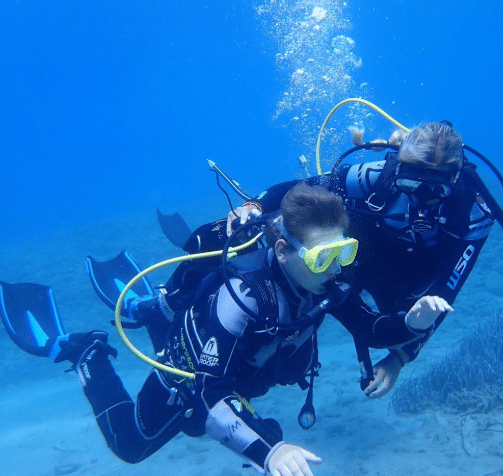
A strong What to Expect section should walk the diver through the experience.
For example:
“The dive begins with a negative or controlled descent depending on conditions. Once the group reaches the wall, the current carries divers along large coral formations while the guide searches for turtles, grouper and eagle rays.”
This helps travelers imagine the dive.
Do not turn the section into exaggerated promotional copy.
Use real details.
Explain Entry and Exit
Dive sites may involve:
- Boat entry
- Shore entry
- Giant stride
- Back roll
- Cenote stairs
- Drift pickup
This practical information can be particularly valuable for:
- Older divers
- Beginners
- Photographers
- Travelers carrying heavy equipment
Boat Ride Time Can Influence Bookings
Travelers often want to know:
- 10 minutes?
- 45 minutes?
- Two hours?
Mention approximate travel time when useful.
For example:
“The reef is typically reached within approximately 20 minutes from the marina.”
This helps customers plan:
- Seasickness medication
- Schedule
- Food
- Equipment
Dive Duration Should Be Explained Carefully
Avoid guaranteeing:
“60-minute dive”
if air consumption or decompression limits determine actual time.
Better:
“Dive time depends on air consumption, depth, conditions and no-decompression limits.”
You can still provide a typical range where appropriate.
Create Sections for Underwater Photographers
Photographers have additional concerns.
A dive site page can explain:
- Wide-angle opportunities
- Macro opportunities
- Light
- Current
- Large animals
- Coral structures
For example:
Best for wide angle: walls, rays, large coral formations.
Best for macro: nudibranchs, shrimp, blennies.
This can target photography-related searches while improving the page.
Explain Whether the Site Is Good for Beginners
This is a frequent search question.
Create a dedicated section.
Possible answer:
“This is not normally the first site we recommend for newly certified divers because of depth and current.”
or:
“The shallow profile and protected location make it one of the more accessible sites for new divers.”
Be honest.
Do not label every dive site beginner-friendly just to increase bookings.
Explain Whether the Site Is Good for Advanced Divers
Advanced divers may look for:
- Depth
- Current
- Swim-throughs
- Wreck penetration limits
- Technical characteristics
Explain what makes the site interesting beyond simply seeing fish.
Dive Site Pages Should Include Safety Information
Useful safety information may include:
- Current
- Depth
- Overhead environment
- Boat traffic
- Entry conditions
- Certification expectations
Keep the information educational.
Do not attempt to replace proper dive training or professional briefing.
A page should prepare the diver for the trip—not teach them how to independently perform advanced diving.
Create a Dive Site Difficulty Table
A simple table can improve usability.
| Factor | Level |
|---|---|
| Depth | Moderate |
| Current | Moderate–Strong |
| Visibility | Usually Good |
| Entry | Boat |
| Certification | Advanced recommended |
| Photography | Excellent wide angle |
This gives customers a fast overview.
Include a Dive Site Map or Location Context
Divers want to understand where the site sits relative to:
- Dive shop
- Marina
- Island
- Hotel zone
- Other reefs
A map can make the page more useful.
If exact coordinates are environmentally sensitive or restricted, use broader geographic context instead.
Avoid Publishing Sensitive Dive Site Information
Not every location should have exact coordinates online.
Sensitive sites may include:
- Archaeological areas
- Fragile reefs
- Restricted caves
- Protected ecosystems
Follow local regulations and conservation practices.
SEO should never compromise site protection.
Dive Site Pages Should Link to the Main Destination Page
A dive site should sit inside a larger content hierarchy.
For example:
Scuba Diving Cozumel
↓
Cozumel Dive Sites
↓
Santa Rosa Wall
The individual page should link back to both:
- Dive Sites guide
- Main Cozumel diving page
This strengthens internal navigation.
Link Dive Site Pages to Related Dive Sites
If someone is interested in one site, they may want similar dives.
For example:
“If you enjoy wall diving, you may also like Punta Sur and Columbia Deep.”
This helps users continue browsing.
It also improves internal linking.
Create Dive-Site Clusters by Experience
You can group sites by:
Beginner Sites
Advanced Sites
Wall Dives
Wrecks
Cenotes
Shark Dives
Photography Sites
Night Dive Sites
These category pages can themselves target valuable searches.
Connect Dive Site Pages to Actual Trips
This is where many dive centers fail.
They create excellent informational pages but no commercial next step.
Every dive-site page should answer:
How can I dive this site?
For example:
“Palancar Caves is commonly included in our two-tank Cozumel reef trips when conditions, certification levels and marine park operations allow.”
Then link to:
Book Two-Tank Cozumel Diving
This connects information with revenue.
Avoid Promising a Specific Site When Operations Vary
Dive site selection may depend on:
- Weather
- Current
- Certification
- Marine park rotation
- Group experience
- Port rules
Do not promise a site unless your operation can genuinely guarantee it.
Use language such as:
“Site selection is confirmed according to daily conditions and diver experience.”
This prevents customer disputes.
Use Commercial CTAs Without Making the Page Feel Like an Ad
A dive-site guide should remain useful.
Good CTAs include:
Explore Our Cozumel Dive Trips
Check Dive Availability
Ask About Diving This Site
Avoid placing:
BOOK NOW!!!
after every paragraph.
A few well-placed CTAs are stronger.
Add a CTA After High-Intent Sections
Useful CTA placements include:
- After “Is This Site Right for You?”
- After “Best Time to Dive”
- Near the end
- After trip information
The visitor should have enough information before being asked to purchase.
Reviews Can Strengthen Dive Site Pages
If a customer review specifically mentions a site, use it where appropriate.
For example:
“Santa Rosa Wall was easily the highlight of our week…”
A site-specific testimonial feels more relevant than a generic review.
Make sure reviews remain authentic.
Add Original Photography
Dive site pages should contain actual site photography whenever possible.
Useful images include:
- Reef structure
- Marine life
- Divers
- Entry
- Wall
- Wreck
- Cenote formations
Original photography demonstrates firsthand experience.
It also helps customers understand what makes one site different from another.
Avoid Using the Same Photos on Every Dive Site Page
If every page shows the same turtle, reef and boat, the pages begin to feel generic.
Use site-specific images whenever possible.
This improves both:
- Credibility
- User experience
The objective is for someone to visually understand the dive.
Optimize Dive Site Images for SEO
Use:
- Appropriate file size
- Descriptive filenames
- Useful alt text
- Modern formats where appropriate
For example:
palancar-caves-cozumel-diving.webp
rather than:
IMG8832.jpg
Alt text might be:
“Scuba divers swimming between coral formations at Palancar Caves in Cozumel.”
Use accurate descriptions.
Do not stuff keywords.
Video Can Improve Dive Site Pages
A short dive-site video can show:
- Topography
- Current
- Marine life
- Visibility
- Diver experience
This may answer questions more effectively than text.
Useful formats include:
- 30-second reef overview
- Dive briefing clip
- Underwater footage
- Guide explanation
Do not allow large autoplay videos to damage mobile performance.
Build a Repeatable Dive Site Page Template
Consistency makes large content projects easier.
A useful template might be:
H1
Dive Site Name + Destination
Introduction
Why the site is interesting.
Quick Facts Table
Depth, skill level, current, visibility, entry.
Where Is It?
Geographic context.
What Makes the Site Special?
Topography.
Marine Life
Species.
Best Time to Dive
Seasonality.
Conditions
Water temperature, visibility, current.
Experience Level
Certification.
What to Expect
Dive experience.
Photography
Photo opportunities.
Related Sites
Internal links.
Book the Dive
Commercial CTA.
This structure can be repeated without making every page identical.
Avoid Copy-and-Paste Dive Site SEO Pages
A template is useful.
Copied content is not.
Do not create:
Reef A
beautiful reef, colorful fish, great visibility.
Reef B
beautiful reef, colorful fish, great visibility.
Reef C
beautiful reef, colorful fish, great visibility.
Each page should have its own information.
How Long Should a Dive Site Page Be?
There is no ideal word count.
Write enough to answer the search intent.
A simple shallow reef may require less content than:
- Technical wreck
- Famous wall
- Complex cenote system
Do not inflate the article simply to reach a word count.
Useful information is more important.
Create Supporting Content Around Dive Sites
Dive-site pages become stronger when supported by broader informational content.
Examples:
- Best Cozumel dive sites
- Beginner dive sites Cozumel
- Best wall dives Cozumel
- Best dives for underwater photography
- Cozumel current guide
- Best season for eagle rays
- Water temperature by month
These pages should link to relevant site guides.
Best Time to Publish Dive Site SEO Pages
Ideally, publish them before major travel planning periods.
Travelers often research dive destinations months before arrival.
A practical workflow could be:
| Timing | SEO Action |
|---|---|
| 4–6 months before high season | Publish core dive sites |
| 2–4 months before | Add seasonal and marine-life content |
| 1–2 months before | Refresh trip links and availability |
| Peak season | Add reviews, photos and current observations |
| Low season | Expand weaker pages |
Do not wait until peak season to build the content foundation.
Refresh Pages When Conditions or Operations Change
Dive site pages should not remain untouched for ten years.
Review them when:
- Marine park rules change
- Certification requirements change
- Boats move
- Sites close
- Entry procedures change
- Major weather events alter topography
- New marine-life patterns emerge
Accuracy supports trust.
Local SEO and Dive Site Pages
Individual dive sites can also support broader local SEO.
For example:
Local SEO page:
Dive Center in Cozumel
links to:
Dive Sites
which links to:
Palancar Caves
Santa Rosa Wall
Columbia Reef
This demonstrates deep local relevance.
A competitor with one generic “Cozumel Diving” page may provide much less destination depth.
Dive Site SEO Pages for Multiple Locations
If a company operates in more than one destination, keep the architecture clear.
Example:
/cozumel/dive-sites/palancar-caves/
/playa-del-carmen/dive-sites/tortugas/
/cenotes/dive-sites/the-pit/
This makes destination relationships easier to understand.
Do not create confusing site structures where every dive location sits at the root URL with no context.
URL Structure for Dive Site SEO
Keep URLs readable.
Good:
/cozumel/dive-sites/santa-rosa-wall/
Also reasonable:
/dive-sites/santa-rosa-wall/
Avoid:
/page?id=49271&location=33
Clean URLs make site organization easier.
Metadata for Dive Site Pages
Each page should have its own SEO title and meta description.
Example:
SEO Title:
Palancar Caves Diving: Cozumel Dive Site Guide
Meta Description:
Explore Palancar Caves in Cozumel, including depth, current, marine life, skill level, best season and what to expect on this famous reef dive.
Do not use the same title template without differentiation across dozens of pages.
Secondary Keywords Should Occur Naturally
For a Palancar page, secondary topics might include:
- Palancar Reef diving
- Cozumel dive sites
- Palancar Caves depth
- Palancar marine life
- diving Palancar Cozumel
Do not repeat every phrase unnaturally.
Answer the relevant questions.
Add Frequently Asked Questions
Useful questions include:
How deep is the dive site?
Is it suitable for beginners?
What certification do I need?
What marine life can I see?
Is there strong current?
What is the best season?
Can underwater photographers dive here?
Can I request this site?
FAQs can resolve booking objections while extending topical coverage.
Optimize the Page for Search and AI Discovery
Travelers increasingly use conversational search.
They may ask:
“What are the best Cozumel dive sites for experienced divers?”
or:
“Is Santa Rosa Wall too difficult for a new diver?”
Pages that clearly explain:
- Skill level
- Depth
- Conditions
- Season
- Marine life
are better positioned to answer these types of questions.
Write for actual divers rather than creating repetitive keyword paragraphs.
Firsthand Expertise Is a Major Advantage
Dive centers have access to information generic travel publishers often do not.
Your divemasters know:
- Where current changes
- Which species are commonly seen
- Which site works in certain conditions
- What beginners struggle with
- How long the boat ride takes
- Which sites photographers prefer
Use that experience.
For example:
“Our guides usually recommend this site to divers comfortable with drift diving because the current can accelerate along the northern section.”
That sounds like real local knowledge.
Because it is.
Include Author or Expert Review
Dive content can benefit from expert attribution.
For example:
Reviewed by:
Esteban Romero, Divemaster and underwater photographer.
or:
Site information reviewed by our local dive team.
This helps demonstrate that the content is grounded in real experience.
Keep credentials accurate.
What Not to Put on Dive Site Pages
Avoid:
- Fake marine-life guarantees
- Unsupported depth claims
- Exact sensitive coordinates
- Outdated regulations
- Copied descriptions
- Keyword stuffing
- Unrealistic visibility guarantees
Accuracy is more useful than exaggerated marketing.
Conversion Improvements for Dive Site Pages
Once the informational foundation is strong, improve conversion.
Add:
Trip Links
Show which trip visits the site.
Pricing Context
Tell users the relevant package price or link clearly to pricing.
Availability
Provide the next operational step.
Useful for questions such as certification and conditions.
Related Dives
Encourage multi-day bookings.
Use Dive Site Pages to Sell Multi-Day Packages
If a destination has many strong sites, build packages.
For example:
Three-Day Cozumel Dive Package
Day 1:
- Paradise Reef
- Chankanaab
Day 2:
- Palancar Gardens
- Columbia
Day 3:
- Santa Rosa Wall
- Punta Tunich
The exact sites may still vary by conditions.
But dive-site content makes the package more tangible.
Dive Site Pages Can Support Upselling
A diver reading about a deeper site may discover they need additional training.
That creates natural links to:
- Advanced Open Water
- Nitrox
- Deep Diver
- Private guide
Do not force the upsell.
Present the training when it genuinely relates to the site.
Example Internal Linking Funnel
Search: Palancar Caves diving
↓
Dive Site SEO Page
↓
Cozumel Two-Tank Dive
↓
Three-Day Dive Package
↓
Booking
This is why dive-site SEO pages can have real commercial value.
Measure Dive Site Page Performance
Track more than rankings.
Useful metrics include:
| Metric | What It Shows |
|---|---|
| Organic impressions | Search visibility |
| Organic clicks | Traffic |
| Destination page referrals | Internal SEO flow |
| Trip-page clicks | Commercial interest |
| Availability clicks | Buying intent |
| WhatsApp inquiries | Leads |
| Bookings | Conversion |
| Revenue | Business value |
One dive-site page may receive little traffic but produce highly qualified customers.
That can still make it valuable.
Identify Which Dive Sites Drive the Most Interest
Analyze:
- Page traffic
- Search queries
- Bookings
- Internal clicks
You may discover that one reef consistently attracts more search interest.
That information can influence:
- Social content
- Photography
- Paid campaigns
- Packages
- Blog topics
SEO becomes market research.
Common Dive Site SEO Mistakes
Putting Every Site on One Page
Individual high-value sites often deserve dedicated pages.
Creating Thin Pages
A paragraph and one photo are rarely enough.
Copying the Same Description
Each site should feel different.
No Marine-Life Information
Divers care deeply about what they may see.
No Seasonal Information
Conditions change.
No Skill-Level Guidance
Help divers self-qualify.
No Trip Link
Informational traffic needs a commercial path.
No Local Expertise
Use real guide knowledge.
No Photos From the Site
Original imagery strengthens credibility.
Guaranteeing Conditions
Visibility and wildlife change.
Practical Dive Site SEO Page Checklist
SEO
- Unique page title
- One clear H1
- Natural primary keyword
- Related secondary keywords
- Descriptive URL
- Unique meta description
Diving Information
- Location
- Depth
- Dive type
- Skill level
- Certification
- Current
- Visibility
- Water temperature
Marine Life
- Common species
- Seasonal wildlife
- No guarantees
- Conservation context
Experience
- Entry
- Boat ride
- Typical dive profile
- What makes the site special
Conversion
- Relevant trip
- Pricing link
- Booking CTA
- Related sites
Media
- Original photos
- Optimized images
- Video when useful
- Accurate alt text
A 90-Day Dive Site SEO Plan
Days 1–30: Build the Architecture
Create:
- Main destination page
- Dive sites hub
- Priority dive-site list
Choose the sites with:
- Highest customer interest
- Strongest search opportunity
- Most commercial relevance
Days 31–60: Publish Core Dive Site Pages
Add:
- Depth
- Conditions
- Marine life
- Seasonality
- Skill level
- Photos
- Internal links
Connect each page to real dive products.
Days 61–90: Expand Authority
Create:
- Best dive sites guide
- Beginner sites guide
- Photography diving guide
- Seasonal marine-life content
Then improve pages based on Search Console and booking data.
Frequently Asked Questions About Dive Site SEO Pages
What are dive site SEO pages?
Dive site SEO pages are dedicated pages about individual scuba diving locations designed to answer diver questions, build destination search authority and connect visitors with relevant dive trips.
Should every dive site have its own page?
Not necessarily.
Prioritize sites that have meaningful search interest, customer value, unique characteristics, or commercial importance.
How long should a dive site page be?
There is no required length.
The page should be long enough to answer important questions about depth, conditions, marine life, seasonality, skill level and how to dive the site.
What keywords should dive site pages target?
Use the dive site name naturally alongside relevant terms such as:
- diving
- scuba diving
- destination
- depth
- marine life
- best time to dive
Should dive site pages include marine life?
Yes.
Marine life is one of the strongest reasons divers research individual sites.
Should dive site pages include prices?
They should at least connect clearly to the relevant trip and pricing.
If the site is part of a standard dive package, explain that.
Should every page include a booking CTA?
Yes, when the dive center actually offers access to that site.
The CTA should connect naturally to the relevant product.
Can dive sites help local SEO?
Yes.
A network of detailed site pages can strengthen a dive center’s overall relevance to a diving destination.
Should dive-site pages promise specific wildlife?
No.
Wildlife encounters and environmental conditions are never guaranteed.
How often should dive-site pages be updated?
Review them whenever important information changes and periodically check conditions, operational details, internal links, pricing and photos.
Final Thoughts: Dive Site SEO Pages Should Build Authority and Sell the Experience
The strongest dive site SEO pages do more than describe where people can dive.
They help prospective customers imagine the experience and decide whether the site is right for them.
A useful page answers:
Where is it?
How deep is it?
What does the underwater landscape look like?
How strong is the current?
What certification do I need?
What marine life might I see?
What is the best season?
Is it suitable for my experience level?
How can I book the dive?
Answering those questions creates value for both search engines and divers.
But the real opportunity appears when multiple site pages work together.
One page about Palancar Caves is useful.
A structured collection covering Palancar, Columbia, Santa Rosa, Punta Sur, Paradise Reef and other local sites can help turn a dive center’s website into a genuine destination resource.
That builds topical authority.
It also helps travelers spend more time on the site, understand the available diving, compare experiences and eventually choose a trip.
The dive center already has the information required.
Its instructors and divemasters know:
- The reefs
- The currents
- The marine life
- The seasonal differences
- The difficulty levels
- The sites photographers prefer
- The questions customers ask every day
The SEO opportunity is to organize that firsthand knowledge into useful pages.
Then connect each page to an actual dive experience.
That creates a clear path:
search → dive site → trust → trip → booking
When built that way, dive site pages are not filler content.
They become one of the strongest SEO and direct-booking assets on a dive center’s website.


 Spanish
  English
  French