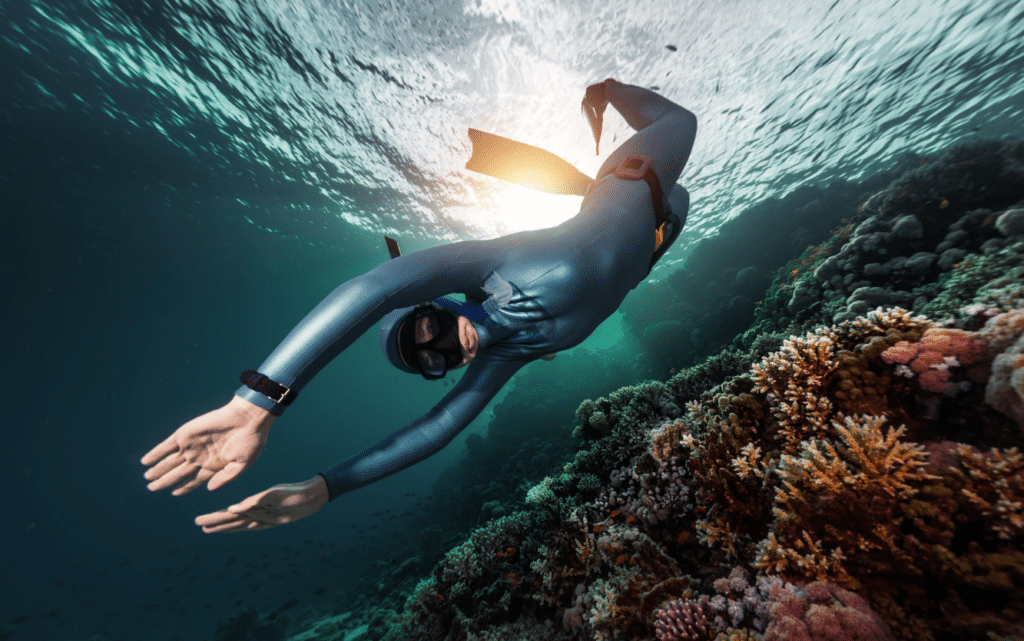
A beginner considering a freediving course rarely worries only about the price.
They are often asking themselves much more personal questions:
Will I be able to hold my breath long enough?
What if I cannot equalize?
Am I fit enough?
Will everyone else be better than me?
Is freediving dangerous?
Will the instructor push me deeper than I want to go?
Can someone like me really learn this?
Those concerns create a very different buying journey from choosing an ordinary tourism activity.
A potential snorkeling customer might simply compare destinations and prices.
A first-time freediver may be evaluating their own ability, confidence, safety, and fear at the same time.
This is why freediving reviews marketing can have such a strong role in course sales.
A course page can say:
“Our instructors create a safe and supportive learning environment.”
But a review from a real student saying that they arrived afraid of diving below three meters, struggled with equalization on the first day, received patient coaching, and eventually completed their first controlled depth session communicates something much more powerful.
It allows the prospective student to think:
“That person sounds like me.”
Reviews provide social proof.
Student progress stories provide context.
Together, they can help transform freediving from something that looks intimidating into something that feels learnable.
This matters because freediving education is fundamentally progressive.
PADI describes its Freediver training as competency-based and says students progress at their own pace rather than according to how quickly they can reach a specific performance. Its course progression moves from Freediver through Advanced and Master levels. (padi.com)
Molchanovs similarly structures beginner training through theory, pool, and open-water progression, with Wave 1 introducing skills such as breath-hold technique, depth work, buddying, and rescue before students move toward more advanced levels. (molchanovs.com)
That progression itself creates one of the strongest storytelling assets a freediving school has:
real people improving over time.
What Is Freediving Reviews Marketing?
Freediving reviews marketing is the strategic use of authentic student feedback, testimonials, progress stories, ratings, photographs, and other forms of social proof to help prospective students understand and trust a freediving school.
It can include:
- Google reviews
- Facebook recommendations
- TripAdvisor reviews where relevant
- Website testimonials
- Student video testimonials
- Course-completion stories
- Before-and-after confidence stories
- Equalization progress stories
- Depth milestones
- Pool-training progress
- Certification achievements
- Student photographs
- User-generated social content
- Instructor responses to reviews
The objective is not simply to collect the highest possible star rating.
The objective is to answer a prospective student’s biggest question:
“What is it actually like to learn freediving with this school?”
Why Reviews Matter So Much in Freediving Course Marketing
Freediving has several characteristics that make reviews particularly influential.
It involves:
- Breath holding
- Depth
- Water confidence
- Equalization
- Physical sensations unfamiliar to beginners
- Safety training
- Instructor trust
- Individual progression
Those factors create perceived risk.
Potential students are not only evaluating the school.
They are also evaluating themselves.
Reviews can help bridge that gap.
A student who reads five different reviews mentioning that instructors were patient with beginners receives a consistent signal.
A student worried about equalization may feel reassured by a review describing someone with the same problem.
Someone afraid of deep water may respond strongly to a story about another student’s gradual confidence development.
Reviews therefore do more than establish reputation.
They can remove specific objections.
Reviews Influence Local Search as Well as Conversion
For physical freediving schools, reviews also have a local SEO role.
Google states that local rankings are primarily based on relevance, distance, and prominence, and specifically notes that review count and positive ratings can contribute to local ranking. (support.google.com)
That means reviews can potentially influence two different parts of the funnel:
Discovery
A stronger local profile may help a school compete in relevant Google Maps and local searches.
and
Decision
Once travelers see the profile, the review content helps them decide whether they trust the school.
That is why Google reviews should not be treated only as reputation management.
They are part of the customer-acquisition system.
Modern Travelers Read Reviews Before They Book
Reviews have become deeply embedded in local purchase behavior.
BrightLocal’s 2026 Local Consumer Review Survey, based on 1,002 U.S. adults, reported that 97% of respondents read online reviews for local businesses. The study also found that consumers increasingly value recent reviews and frequently continue to a business’s website after reading positive feedback.
That survey is not specific to freediving schools and should not be treated as a direct measurement of freediving customers.
However, it illustrates a broader consumer behavior that matters to local adventure businesses:
people want evidence from other customers before committing.
For a freediving school, the website then needs to continue the trust-building process started by the review.
Reviews vs. Student Progress Stories
These are related but not identical.
| Review | Student Progress Story |
|---|---|
| Usually written by the customer | Often developed with the student’s permission |
| Short or medium length | More detailed |
| Hosted on third-party platform or website | Website, social, email, video |
| Evaluates the experience | Shows a journey |
| Strong trust signal | Strong identification and storytelling |
| Often unstructured | Can follow clear milestones |
| Useful for local SEO | Useful for conversion and content |
A good freediving marketing strategy uses both.
Reviews provide independent validation.
Progress stories show what transformation can look like.
Why Progress Stories Work Particularly Well for Freediving
Freediving lends itself naturally to progress-based storytelling.
Someone might start with:
“I panic when I try to hold my breath.”
Then learn relaxation.
Another person might begin unable to equalize below four meters.
Then learn the correct technique.
Someone else might enter the course believing they could never reach ten meters.
Their real success might not even be the final depth.
It might be becoming calm enough to enjoy the descent.
That creates multiple types of meaningful progress.
Physical Progress
Examples:
- Improved breath-hold comfort
- Better finning technique
- Improved streamlining
- Greater depth
- Longer dynamic distance
Technical Progress
Examples:
- Learning equalization
- Improving duck dive technique
- Learning free immersion
- Developing recovery breathing
Safety Progress
Examples:
- Learning proper buddy procedures
- Performing rescue drills
- Becoming comfortable supervising another diver
Molchanovs Wave 1, for example, includes both depth skills and safety competencies such as open-water buddying and blackout rescue rather than treating depth alone as the definition of progression.
Emotional Progress
Examples:
- Moving beyond fear
- Becoming comfortable underwater
- Learning to relax
- Building confidence
- Developing patience
For marketing, emotional progress is often the most relatable.
Do Not Build Every Student Story Around Maximum Depth
This is one of the most important distinctions in freediving marketing.
If every student story says:
“Sarah came to us at 10 meters and reached 30 meters!”
your marketing may unintentionally communicate:
depth is the only outcome that matters.
That can intimidate beginners.
It can also misrepresent what high-quality freediving education is supposed to accomplish.
PADI explicitly describes certification as competency-based, with students progressing at their own pace and instructors focusing on making them confident and comfortable freedivers rather than rushing them through training.
That gives schools many other progress stories to tell.
For example:
“Ana came into her first session worried that she couldn’t hold her breath for even a minute. By the end of the course, her biggest achievement wasn’t a number—it was learning how to relax enough to enjoy being underwater.”
That story may sell more beginner courses than a 40-meter depth post.
What Prospective Freedivers Look for in Reviews
A future student is often searching reviews for evidence around specific concerns.
Instructor Patience
Beginners want to know whether they will be rushed.
Safety
Students need to trust the instructor.
Equalization Support
This is one of the most common beginner concerns.
Group Size
Students may worry about receiving enough individual attention.
Course Organization
Were schedules, locations, and equipment clear?
Instructor Communication
Was the theory understandable?
Confidence
Did nervous students feel supported?
Progress
Did students feel that they learned something meaningful?
Equipment
Was rental equipment appropriate and maintained?
Training Environment
Was the pool, cenote, lake, or ocean site suitable?
A good review profile naturally answers many of these questions.
The Best Reviews Are Specific
Compare these two examples.
Generic Review
“Amazing course! Great instructor. Highly recommended.”
Positive?
Yes.
Useful?
Only partially.
Now compare:
“I had never freedived before and struggled with equalization during the first open-water session. My instructor slowed everything down, helped me change technique, and never made me feel pressured to reach a depth. By the second day I was much more relaxed and finally understood how equalization should feel.”
That review tells a prospective student much more.
It communicates:
- Beginner suitability
- Instructor patience
- Problem solving
- No pressure
- Technical expertise
- Personal progress
Those details influence buying decisions.

Do Not Tell Students What to Write in Google Reviews
There is an important line between encouraging authentic reviews and manipulating them.
Google allows businesses to ask customers for genuine reviews.
However, its policy prohibits:
- Paying for reviews
- Offering discounts or free products in exchange for reviews
- Pressuring users to leave a review
- Selectively soliciting only positive reviews
- Asking reviewers to include specific predetermined content
Google explicitly states that merchants may encourage authentic feedback as long as they do not offer incentives or try to influence the rating or review content.
So do not send:
“Please leave us a five-star review and mention how safe Instructor Maria made you feel.”
Instead:
“Thanks for training with us. If you’d like to share your experience, we’d really appreciate an honest Google review.”
That is safer and more authentic.
Never Offer Course Discounts for Google Reviews
This is especially tempting for schools offering advanced courses.
For example:
“Leave us a five-star review and get 10% off Wave 2.”
Do not do this.
Google explicitly prohibits payments, discounts, free goods, or free services offered in exchange for posting or modifying reviews.
Besides the platform-policy risk, incentivized reviews damage the value of the review system.
A prospective student wants to know:
Did this person genuinely recommend the school?
Not:
Did this person want a discount?
When Is the Best Time to Ask for a Freediving Review?
Timing affects both response rates and review quality.
The best moment is usually after the student has experienced a meaningful outcome.
That could be:
- After course completion
- After certification
- After a successful depth session
- After overcoming an equalization problem
- After a training camp
- After completing rescue skills
- After a positive recreational freedive
The moment should feel natural.
Ask After the Emotional High Point
Many freediving courses contain moments students remember vividly.
Examples:
- First comfortable ten-meter dive
- First successful free immersion
- Finally equalizing comfortably
- Completing the first rescue drill
- Reaching the bottom plate
- Finishing certification
- Seeing marine life during a relaxed dive
A simple review request soon afterward can work well because the experience is fresh.
BrightLocal’s 2026 consumer research also found that review recency matters strongly to consumers, supporting the value of building an ongoing review process rather than gathering reviews only occasionally.
Do Not Interrupt the Student Experience to Demand a Review
Do not make the review request feel like part of the certification requirement.
Avoid:
“Before you leave, everyone take your phones out and review us.”
That can feel pressured.
Google’s policies specifically say merchants should not pressure users to leave reviews while they are at the business.
Instead, send the request afterward through:
- Courrier électronique
- Course-completion message
- Follow-up message
Give the student control.
Build an Automated Review Follow-Up
A simple system could look like:
Day 0: Course Completion
Send certification information and congratulations.
Day 1
Send useful post-course information:
- Training recommendations
- Safety reminder
- Community session schedule
Day 2–3
Ask for honest feedback.
Provide one direct review link.
Later
Invite the student to:
- Training sessions
- Advanced course
- Freediving trip
- Community event
This creates a better experience than sending three review reminders immediately after certification.
Turn Reviews Into Website Conversion Assets
Google reviews should not remain only on Google.
With appropriate permissions and accurate attribution, selected student feedback can also support key website pages.
Useful locations include:
- Homepage
- Beginner Freediver page
- Advanced course page
- Instructor page
- Course pricing page
- Destination page
Place testimonials where the objection occurs.
Match Reviews to the Course
Do not display the same five reviews everywhere.
Beginner Course Page
Use feedback discussing:
- Fear
- First breath hold
- Equalization
- Instructor patience
- Safety
Advanced Course Page
Use reviews mentioning:
- Technique improvement
- Depth progression
- Mouthfill
- Training structure
- Equalization refinement
Freediving Camp Page
Use reviews discussing:
- Community
- Location
- Coaching
- Training schedule
- Experience
Relevance improves persuasion.
Build Student Progress Stories as Mini Case Studies
A student progress story can follow a simple structure.
Starting Point
Who was the student?
What worried them?
Challenge
What was difficult?
Coaching
How did the instructor help?
Progress
What changed?
Outcome
How did the student feel afterward?
Next Step
What are they working on now?
This creates a human story without needing dramatic claims.
Example Student Progress Story Structure
Student: First-time freediver
Starting point: Comfortable snorkeling but nervous about breath holding.
Challenge: Difficulty relaxing and equalizing below five meters.
Training: Dry equalization exercises, slower descents, more surface recovery.
Progress: Comfortable controlled descents and improved equalization.
Result: Completed beginner certification and joined regular practice sessions.
Notice what is missing:
“We made her a 20-meter freediver in two days!”
The story focuses on learning.
Create Progress Content Without Embarrassing Students
Not every student wants their starting point public.
Someone may not want an Instagram post saying:
“John could only hold his breath for 38 seconds.”
Always ask permission before sharing:
- Names
- Photos
- Videos
- Depths
- Breath-hold times
- Personal difficulties
Offer options:
- Full name
- First name only
- Anonymous story
- No performance numbers
- Photo only
- No social sharing
Consent is part of good customer experience.
Video Testimonials for Freediving Schools
Video is especially powerful because potential students can see the person behind the story.
A simple testimonial can ask:
What were you nervous about before the course?
What surprised you?
What did you improve?
How did the instructor help?
What would you tell another beginner?
The result often feels more authentic than scripted promotional language.
Do not make the student memorize marketing copy.
Student Progress Reels and Short-Form Video
Progress stories can also become short social videos.
A structure might look like:
Hook
“She thought she couldn’t freedive because she couldn’t equalize.”
Beginning
Show first-session training.
Problem
Explain the challenge.
Progress
Show technique work.
Outcome
Show a comfortable later dive.
Student reaction
Include their words.
CTA
“Thinking about learning freediving? Start with our beginner course.”
This turns education into social proof.
Before-and-After Content Without Dangerous Messaging
“Before and after” can work—but freediving schools must use it carefully.
Avoid presenting extreme performance gains as guaranteed.
For example:
Bad:
“0–30 meters in three days. You can do it too.”
Better:
“From struggling with equalization to relaxed, controlled descents.”
Focus on technique and confidence.
Freediving outcomes vary dramatically by student.
Show Progress Beyond Performance Numbers
Useful student transformations include:
| Starting Concern | Progress Story |
|---|---|
| “I can’t hold my breath.” | Learned relaxation and breathing preparation |
| “My ears hurt.” | Improved equalization technique |
| “I’m afraid of deep water.” | Became comfortable on the dive line |
| “I use too much energy.” | Improved streamlining and finning |
| “I don’t know how to buddy.” | Learned safety and rescue |
| “I always rush.” | Developed slower, calmer dives |
| “I feel lost after certification.” | Joined regular coaching sessions |
These stories show how freediving education actually develops people.
Use Certification Progression as a Content Framework
Freediving education already has natural milestones.
For example, PADI offers progression from Freediver to Advanced Freediver and Master Freediver, while Molchanovs uses progressive Lap and Wave levels.
That gives schools recurring opportunities for storytelling.
Possible stories:
First Course
From curiosity to certified beginner.
Second Level
From basic comfort to refined technique.
Training Phase
How regular practice changed consistency.
Advanced Training
Learning to manage deeper equalization.
This creates continuity.
Reviews Can Help Sell Advanced Courses
Reviews are not only for first-time students.
Advanced students want different evidence.
They may look for:
- Technical instructor knowledge
- Depth coaching
- Equalization expertise
- Safety protocols
- Individual feedback
- Training structure
Use advanced testimonials on advanced pages.
A review from a nervous beginner may be perfect for a Level 1 course but less persuasive for someone seeking 30-meter technique coaching.
Use Reviews to Sell the Instructor, Not Just the School
Freediving is highly instructor-dependent.
Students may spend many hours:
- Learning theory
- Breathing
- Training in confined water
- Diving on a line
- Practicing rescue
The instructor relationship matters.
Create instructor pages with:
- Certification
- Experience
- Languages
- Teaching philosophy
- Specialties
- Student reviews
Then allow reviews to reinforce the claims.
Safety Reviews Are Especially Valuable
Freediving customers need to trust safety procedures.
Useful feedback may naturally mention:
- Conservative progression
- Buddy supervision
- Rescue practice
- Small groups
- Clear briefings
- Instructor attention
Do not manufacture safety claims through testimonials.
Let students describe what they experienced.
Local SEO and Freediving Reviews
A freediving school may target local searches such as:
- freediving course near me
- freediving school Tulum
- freediving instructor Playa del Carmen
- freediving course Bali
- freediving certification Dahab
Google states that local visibility depends primarily on relevance, distance, and prominence, and that more positive reviews can help local ranking.
That makes an active review profile particularly valuable for destination-based freediving schools.
Keep Review Generation Continuous
A profile with 150 reviews may look impressive.
But if the newest one is three years old, prospective students may wonder:
- Is the school still active?
- Are the same instructors there?
- Has management changed?
- Is the equipment still good?
BrightLocal’s 2026 survey found strong consumer preference for recent reviews, reinforcing the value of steady review acquisition rather than one large review campaign.
Build reviews into normal operations.
Respond to Freediving Reviews
Do not ignore students after they leave feedback.
Google encourages businesses to reply to reviews because responses demonstrate that customer feedback matters.
Good responses can also reveal personality.
Instead of:
“Thanks for the five stars!”
try:
“Thanks, Maria. It was great watching your equalization become more comfortable during the second open-water session. We hope to see you back for a training day soon.”
Keep it natural.
Do not repeat keywords unnaturally.
How to Respond to Negative Freediving Reviews
Negative feedback is inevitable.
Possible complaints may involve:
- Course pacing
- Weather
- Cancellation
- Instructor communication
- Equipment
- Group size
- Certification requirements
- Failure to meet performance criteria
Never attack the student publicly.
A professional response should:
- Acknowledge the experience.
- Clarify facts where appropriate.
- Avoid sharing private details.
- Explain how the issue can be resolved.
- Move detailed discussion offline.
A thoughtful response can sometimes increase trust.
Potential customers are watching how the school handles problems.
Certification Failure Needs Careful Communication
Not every student automatically meets every course requirement.
This can create disappointment.
Your website should explain before booking that certification depends on successfully completing required knowledge and skills.
PADI describes Freediver certification as competency-based, meaning students earn certification after demonstrating the required abilities rather than simply attending for a fixed number of hours.
Clear expectations can prevent negative reviews later.
Student Progress Content Can Improve Course Pages
A beginner course page often contains:
- Curriculum
- Price
- Duration
- Requirements
Add:
Real Student Progress
For example:
“Many beginners arrive worried about breath holding. During the course, students learn relaxation, breathing preparation, finning, equalization, buddy procedures, and controlled open-water diving.”
Then insert an authentic student story.
This makes abstract course content tangible.
Add Reviews Near Pricing
Price creates hesitation.
That makes pricing sections a good place for social proof.
For example:
Beginner Course — $X
followed by:
“I originally hesitated because I wasn’t sure whether I could even reach the course depth. My instructor never rushed me…”
This answers the emotional objection alongside the financial one.
Add Reviews Near Safety Information
Safety information can sometimes make an activity feel more intimidating.
Balance technical safety information with authentic student experiences.
For example:
Our Safety Approach
then:
“The safety training was one of the parts I appreciated most. By the end of the course I understood not only how to dive, but how to safely buddy someone else.”
That reframes safety training as value.
Build a Dedicated Student Stories Page
A strong website can include:
Student Stories
rather than a generic:
Testimonials
Organize stories by:
- Beginner
- Advanced
- Equalization journey
- Confidence
- Pool freediving
- Depth training
- Freediving camp
- Instructor training
This becomes a richer marketing asset.
Reviews and User Experience Must Match
Reviews cannot compensate indefinitely for a poor website.
BrightLocal’s 2026 survey found that many consumers continue researching after reading positive reviews, with the business website being a major next step.
That means the freediving website should reinforce what reviews promise.
If reviews repeatedly praise:
“small groups”
the website should explain group size.
If students praise:
“excellent safety procedures”
the safety page should show them.
If people mention:
“patient instructors”
show real instructor profiles.
Consistency increases credibility.
Reviews Should Influence Website Improvements
Reviews are customer research.
Analyze repeated themes.
If Students Repeatedly Mention
“I didn’t know equipment was included.”
Improve the course page.
If Reviews Say
“The meeting point was hard to find.”
Improve arrival instructions.
If Students Praise
“Small groups.”
Make that advantage more visible.
If Complaints Mention
“I didn’t understand the certification requirements.”
Explain them earlier.
Reviews should influence operations and UX—not just advertising.
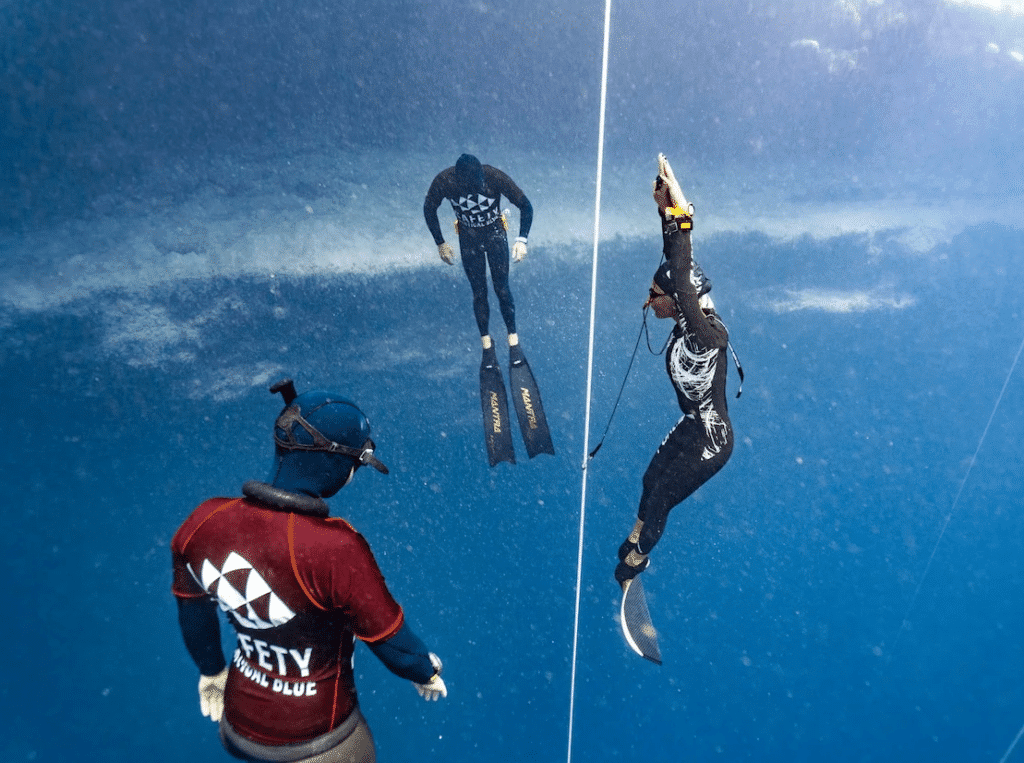
Build a Freediving Review Theme Dashboard
Categorize reviews by topic.
| Review Theme | Marketing Use |
|---|---|
| Safety | Course and instructor pages |
| Patience | Beginner marketing |
| Equalization | Educational content |
| Confidence | Student stories |
| Marine environment | Destination content |
| Equipment | Course inclusions |
| Community | Retention marketing |
| Advanced coaching | Higher-level courses |
| Organization | Booking UX |
Over time, repeated themes reveal what customers value most.
Best Time of Year to Focus on Review Marketing
Review collection itself should happen year-round.
But seasonal strategy still matters.
Before High Season
Use recent reviews to strengthen:
- Course pages
- Google Business Profile
- Ads
- Landing pages
During Peak Season
Build review volume steadily as more students pass through the school.
Shoulder Season
Create deeper student progress stories from recent courses.
Low Season
Analyze reviews.
Update:
- Website copy
- FAQs
- Course descriptions
- Policies
- Instructor profiles
Then enter the next season with stronger proof.
A Seasonal Freediving Reviews Marketing Calendar
| Period | Main Goal |
|---|---|
| 3–4 months before peak | Refresh testimonials and website |
| 1–2 months before peak | Publish student stories |
| Peak season | Consistent review requests |
| After each course | Ask for authentic feedback |
| Shoulder season | Develop case-study content |
| Low season | Analyze review themes and improve UX |
The review process should remain continuous even when marketing emphasis changes.
Use Reviews in Paid Advertising Carefully
Customer language can inspire strong advertising.
For example, if multiple reviews say:
“I thought I couldn’t equalize.”
a paid campaign could use the theme:
Struggling with equalization doesn’t mean you can’t learn freediving.
Then direct the visitor to a beginner course or workshop.
Do not fabricate a testimonial.
Use themes responsibly.
Student Stories for Email Marketing
Progress content works well in email.
Examples:
Subject idea:
From afraid of depth to comfortable on the line
The email tells the story.
Then:
“Our next beginner course starts…”
This is much stronger than sending only:
“10% OFF FREEDIVING COURSE THIS WEEK.”
The story provides a reason to care.
Progress Stories Can Support Retention Marketing
A certified beginner should not disappear from the database.
Use student progress to inspire the next step.
For example:
“Remember how the first ten meters felt?”
then introduce:
- Coaching
- Advanced certification
- Equalization workshop
- Training camp
- Pool sessions
Existing students already trust the school.
Their next purchase is often easier than acquiring an entirely new customer.
Create a Community, Not Only a Review Funnel
Freediving is naturally community-oriented because divers need trained buddies.
A school can strengthen retention through:
- Regular training sessions
- Depth days
- Pool practice
- Social events
- Freediving trips
- WhatsApp groups
- Workshops
This produces a richer customer relationship.
Reviews then emerge from an ongoing experience rather than a one-time transaction.
Reviews Can Help Market Freediving Destinations
Student experiences may also describe:
- Cenote visibility
- Warm water
- Reef life
- Marine encounters
- Calm conditions
- Training sites
This content can support destination marketing.
For example:
“The cenote was perfect for my first depth course because there were no waves and the visibility helped me relax.”
That testimonial simultaneously sells:
- Instructor
- Course
- Environment
- Destination
Marine Life Can Become Part of Student Stories
For recreational freedivers, progress is not always about depth.
A student’s favorite moment might be:
- Swimming with turtles
- Watching rays
- Entering a cenote
- Seeing reef fish silently
- Experiencing open water without scuba equipment
Those experiences can make progress stories more emotionally compelling.
But never guarantee marine-life sightings.
Wildlife remains unpredictable.
Combine Reviews With Educational Content
Suppose you publish:
Why Can’t I Equalize While Freediving?
Inside the article, include a short real student story about learning equalization.
Then link to:
Beginner Freediving Course
or:
Equalization Workshop
This creates:
problem → education → proof → solution
That is a strong content funnel.
Reviews Marketing vs. Generic Testimonials
| Generic Testimonials | Strategic Review Marketing |
|---|---|
| “Amazing experience!” | Specific course outcomes |
| Same reviews everywhere | Matched to buyer concern |
| No context | Student starting point |
| Focus only on praise | Focus on progress |
| Static testimonial page | Integrated across funnel |
| No operational insight | Used to improve UX |
| Collected occasionally | Continuous process |
Freediving schools should move toward the second model.
Common Freediving Reviews Marketing Mistakes
Asking Only for Five-Star Reviews
Ask for honest feedback instead.
Offering Discounts for Reviews
Google prohibits incentivized reviews.
Only Featuring Elite Freedivers
Beginners need people they can identify with.
Making Every Story About Depth
Confidence and technique are equally valuable.
Writing Testimonials for Students
Use their real voice.
Sharing Performance Without Permission
Respect privacy.
Collecting Reviews Once a Year
Build an ongoing process.
Ignoring Negative Reviews
Respond professionally.
Hiding Reviews on One Page
Integrate relevant proof throughout the buying journey.
Never Learning From Feedback
Reviews should improve operations.
Practical Freediving Reviews Marketing Checklist
Google Reviews
- Verify your Business Profile.
- Create a direct review link.
- Ask consistently.
- Ask for honest feedback.
- Never offer incentives.
- Reply to reviews.
- Monitor recurring themes.
Site web
- Add testimonials to course pages.
- Add relevant reviews near pricing.
- Create student stories.
- Add instructor-specific testimonials.
- Show current reviews.
Student Progress
- Capture the starting challenge.
- Explain the learning process.
- Focus on technique and confidence.
- Avoid guaranteed outcomes.
- Get permission.
Social Content
- Film student reactions.
- Share milestone stories.
- Show learning, not just records.
- Tag students only with consent.
Operations
- Analyze negative feedback.
- Improve common friction points.
- Update course expectations.
- Improve arrival instructions.
- Clarify certification requirements.
A 90-Day Freediving Reviews Marketing Plan
Days 1–30: Build the Review System
Audit:
- Google reviews
- Website testimonials
- Course pages
- Follow-up process
Create:
- Direct Google review link
- Post-course review message
- Review response guidelines
- Student consent process
Days 31–60: Build Student Stories
Identify several student journeys.
Cover different profiles:
- Complete beginner
- Equalization challenge
- Nervous student
- Advanced student
- Returning student
Create:
- Website stories
- Short videos
- Social content
Days 61–90: Integrate Reviews Into Conversion
Add relevant proof to:
- Beginner course page
- Advanced course page
- Pricing
- Instructor profiles
- Safety section
- Destination pages
Then measure:
- Course inquiries
- Booking conversion
- Google profile activity
- Review growth
Metrics to Track
Do not measure success only by total review count.
Track:
| Metric | Why It Matters |
|---|---|
| New reviews per month | Review consistency |
| Review recency | Current trust signal |
| Average rating | Overall reputation |
| Review themes | Customer priorities |
| Google Business Profile actions | Local demand |
| Course page conversion | Sales impact |
| Inquiry rate | Purchase intent |
| Beginner course bookings | Revenue |
| Advanced-course repeat rate | Retention |
| Student story engagement | Content interest |
The objective is not “more reviews.”
It is:
more trustworthy evidence that helps the right students choose the right course.
Frequently Asked Questions About Freediving Reviews Marketing
What is freediving reviews marketing?
Freediving reviews marketing is the strategic use of authentic student reviews, testimonials, progress stories, and other social proof to help prospective students trust a freediving school and understand what learning with that school is actually like.
Are Google reviews important for freediving schools?
Yes.
Reviews influence customer trust, and Google states that review count and positive ratings can contribute to a business’s local prominence and local search ranking.
When should a freediving school ask for reviews?
A natural time is shortly after a meaningful positive experience such as course completion, certification, successful training, or another important learning milestone.
Avoid pressuring students while they are still onsite.
Can freediving schools offer discounts for reviews?
Not for Google reviews.
Google prohibits incentives such as discounts, payments, free goods, or free services in exchange for reviews.
Should schools ask specifically for five-star reviews?
No.
Ask for honest reviews.
Google prohibits selectively soliciting positive reviews and attempts to manipulate ratings.
Should student progress stories include depth?
They can, when the student consents and the number provides useful context.
But depth should not be the only measure of success.
Technique, equalization, safety skills, relaxation, confidence, and consistency can all demonstrate meaningful progress.
What makes a strong freediving testimonial?
Specific details.
A review explaining the student’s starting concern, instructor support, and progress provides much more useful information than a generic “great course” statement.
Should freediving schools respond to reviews?
Yes.
Google recommends responding because it demonstrates that customer feedback matters.
Can reviews help sell advanced freediving courses?
Yes.
Use testimonials from advanced students that discuss coaching quality, technical progression, equalization, safety, and training structure rather than beginner concerns.
Can reviews improve the website itself?
Absolutely.
Repeated feedback can reveal missing information, confusing policies, unclear directions, course-expectation problems, and areas students value most.
Final Thoughts: Student Progress Is One of the Strongest Marketing Assets a Freediving School Has
Effective freediving reviews marketing should not be about manufacturing perfect five-star profiles.
It should be about showing prospective students what learning freediving really looks like.
Beginners are not always searching for the deepest instructor.
They may be searching for someone who will be patient when they cannot equalize.
Someone who will explain why the urge to breathe feels unfamiliar.
Someone who will not rush them.
Someone who will teach them to become a safe buddy.
Someone who understands that confidence at five meters can be a bigger achievement than another student’s 25-meter dive.
That is why student progress stories are so valuable.
They transform abstract promises into evidence.
The school says:
“We teach beginners.”
The student story demonstrates it.
The school says:
“We focus on safety.”
The review confirms it.
The school says:
“Everyone progresses at their own pace.”
Real students show what that progression can look like.
Major freediving education systems themselves are structured around gradual skills development rather than a single performance number. PADI describes students progressing according to competency, while Molchanovs builds beginner education through theory, pool, open-water skills, buddying, and rescue.
Your marketing should reflect the same philosophy.
Collect authentic feedback continuously.
Ask at the right moment.
Never pay for reviews.
Respond thoughtfully.
Turn appropriate reviews into website proof.
Tell real student stories with permission.
Show technical, emotional, and safety progress—not only depth.
Use negative feedback to improve the customer experience.
And make it easy for a nervous prospective student to look at someone else’s journey and think:
“I could probably do this too.”
When that happens, reviews stop being a collection of stars.
They become part of the freediving school’s sales system.


 French
  Spanish
  English