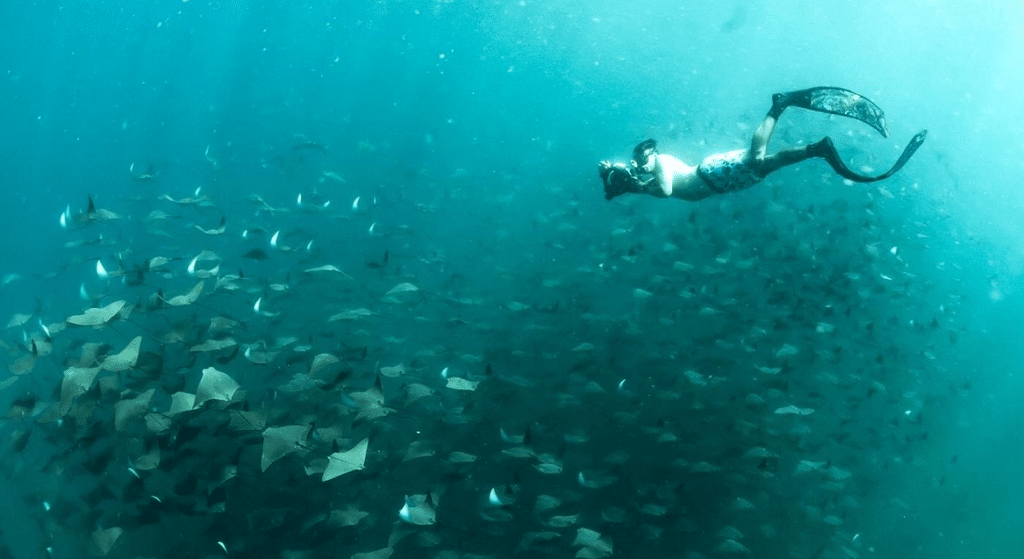
SEO vs Social Media for Freediving Schools: Why Choosing the Right Marketing Channels Matters
Running a freediving school is already a balancing act. Between teaching breath-hold techniques, checking ocean conditions, preparing equipment, and managing student schedules, marketing often becomes something you squeeze into whatever time remains.
Maybe you’re posting beautiful underwater videos on Instagram, sharing student achievements, and uploading Reels of peaceful descents into crystal-clear water.
Your content gets likes. People comment on how incredible the experience looks. Some even ask where your school is located.
But when you look at your booking calendar, the results don’t necessarily match the attention you’re getting online.
This raises an important business question: Should your freediving school invest more in SEO or social media marketing?
The answer is more interesting than choosing one platform over another.
Search engine optimization and social media influence different stages of the customer journey. They attract different types of attention, create different opportunities, and require different investments.
Someone watching a freediving video on Instagram might simply enjoy underwater photography. Someone searching Google for “freediving certification in Playa del Carmen” may already be looking for an instructor and comparing available courses.
Both audiences can become customers, but they are not at the same stage of the buying process.
Understanding SEO vs social media freediving strategies helps school owners invest their time and marketing budgets where those efforts have the greatest commercial potential.
For most established freediving schools, the strongest opportunity isn’t abandoning social media or relying entirely on Google. It’s developing a coordinated strategy that creates interest, captures existing demand, and turns potential students into confirmed bookings.
Understanding the Difference Between SEO and Social Media Marketing
Before comparing performance, it’s important to understand what each channel actually does for a freediving business.
SEO focuses on improving your website’s visibility when people search for relevant topics, services, or locations through search engines.
Social media marketing focuses on building awareness, relationships, engagement, and customer interest through platforms such as Instagram, Facebook, TikTok, and YouTube.
Both can attract students, but the way people discover your business is often different.
SEO Captures People Who Are Already Searching
Imagine someone planning a trip to Mexico who wants to complete a beginner freediving certification during their vacation.
They search for “freediving courses in Playa del Carmen” and begin comparing schools.
If your website has a relevant, well-optimized course page, your business has an opportunity to appear during that research process.
The visitor may already know what they want. Your job is to help them determine whether your school is the right choice.
This is one of SEO’s greatest commercial advantages: it can connect your business with people who are actively expressing interest through their searches.
Google’s SEO Starter Guide describes optimization as a way to help search engines understand website content and help users discover relevant pages. It does not promise rankings, but provides practical principles for improving search visibility.
Social Media Creates Interest Before People Start Searching
Social media works differently.
Someone scrolling through Instagram might have no intention of learning freediving that afternoon.
Then they encounter a video showing a diver descending peacefully beside a reef.
The video captures their attention. They visit the school’s profile, watch a few more clips, and begin wondering what it would take to experience something similar.
Social media can introduce your business to people who were not actively searching for lessons.
It also gives prospective students a chance to observe instructors, teaching environments, student progress, and the personality behind the school.
For an experience-based business, that kind of visual storytelling can be extremely valuable.
The limitation is that interest doesn’t always translate into immediate booking intent.
A video can be entertaining without generating a single qualified enquiry.
SEO vs Social Media for Freediving: A Direct Comparison
The following comparison shows how each channel can contribute to a freediving school’s marketing strategy.
| Factor | SEO | Social media |
|---|---|---|
| Main purpose | Capture relevant search demand | Build awareness and engagement |
| Typical audience | People researching specific topics or courses | Followers and broader interest-based audiences |
| Booking intent | Often higher for service searches | Varies considerably |
| Time to develop | Usually gradual | Content can gain exposure quickly |
| Content lifespan | Useful pages may attract traffic over time | Attention often depends on continued distribution |
| Main investment | Website, content, technical and local optimization | Creative production, management, community engagement |
| Customer trust | Detailed content, reviews, website experience | Videos, testimonials, instructor personality |
| Business control | Greater control over website content | Distribution depends on platform systems |
| Measurement | Organic traffic, enquiries, bookings | Reach, engagement, referrals, enquiries |
| Best opportunity | Consistent discovery and high-intent acquisition | Brand development and demand creation |
Neither column represents a guarantee.
An effective Instagram campaign can generate direct bookings, while a poorly optimized website may attract little relevant traffic.
The goal is to understand where each channel fits into your business rather than assume one is automatically superior.
Why Freediving Schools Often Depend Too Much on Instagram
Freediving is naturally suited to visual content.
Few sports provide the same combination of underwater landscapes, human performance, calm movement, and extraordinary marine environments.
For schools in destinations such as Dahab, Amed, or Playa del Carmen, social media offers an appealing way to present the experience.
The challenge begins when Instagram becomes the entire marketing strategy.
A school may post regularly, develop an attractive profile, and attract thousands of followers without creating a dependable customer acquisition process.
Followers Don’t Necessarily Represent Future Students
Imagine a freediving school with 15,000 Instagram followers.
That sounds promising, but consider where those followers live, what interests them, and whether they have the ability or intention to book lessons.
Some might be professional divers, photographers, equipment enthusiasts, or people who simply enjoy ocean content.
A large audience can support brand awareness, but it isn’t automatically a commercially qualified audience.
A much smaller group of people searching for beginner certification in your actual destination may represent stronger short-term booking opportunities.
This doesn’t make followers unimportant. It simply means follower count should not be confused with business demand.
Organic Social Media Requires Continuous Attention
Social media can create visibility quickly, but maintaining an active presence generally requires consistent creative effort.
Schools need to plan content, film lessons, edit videos, write captions, respond to comments, and manage enquiries.
That workload becomes particularly challenging during peak teaching periods.
When instructors are busy in the water all day, content production may become inconsistent.
A website with strong evergreen course pages can provide another route to discovery even during periods when the school is less active on social platforms.
However, SEO also needs maintenance. Content, technical issues, competitors, and changing search behavior all require attention.
The difference is not that SEO runs forever without work. It’s that useful website assets can continue serving potential customers beyond the day they are published.
Social Media Engagement Doesn’t Always Lead to Bookings
A Reel showing a deep dive may receive substantial attention because it is visually impressive.
But viewers may not understand whether your school offers beginner lessons, where it operates, or how much courses cost.
If the content doesn’t give interested viewers a clear next step, potential business opportunities may disappear.
Social media needs a conversion path.
That might involve a clearly organized profile, a relevant course link, a useful landing page, or a straightforward enquiry process.
Without those elements, the school may be building an audience without creating an efficient way to turn interest into customers.
Why SEO Can Create More Sustainable Demand for Freediving Courses
SEO offers a different commercial advantage: the opportunity to build discoverability around questions and services that potential customers search for repeatedly.
Consider the questions a prospective freediving student may ask before making a reservation.
Where can I learn freediving? How much does certification cost? What are the prerequisites? Can beginners participate? Which school offers courses during my travel dates?
A website that answers these questions can become a useful resource throughout the customer’s research process.
Search Visibility Can Support Customer Acquisition Beyond Campaign Dates
A well-developed page for “beginner freediving courses in Dahab” may remain relevant for an extended period if the school continues offering that service.
Unlike a time-sensitive social post, the page does not need to be republished every few days to exist as a searchable resource.
That doesn’t guarantee consistent traffic. Rankings and search demand can change, and competitors may improve their content.
Still, investing in strong service pages creates assets that your business owns and can continue refining.
SEO Can Attract More Commercially Relevant Searches
Not every Google search has buying intent.
Someone searching “what is freediving” may simply be curious about the sport.
However, queries such as “book freediving certification in Tulum” or “private freediving instructor in Dahab” suggest a more specific service need.
That distinction is important when allocating a marketing budget.
A school should prioritize pages that match its actual services and customer requirements before investing heavily in broad informational topics.
Google recommends producing content that genuinely helps users and demonstrates relevant experience rather than content designed primarily to manipulate search rankings.
For freediving businesses, that means accurate course details, real instructor knowledge, clear certification information, and transparent booking procedures.
Your Website Gives You More Control Over the Customer Journey
On social media, the platform determines many aspects of how content is displayed and distributed.
On your website, you have greater control over the visitor experience.
You can organize courses, display prices, explain instructor qualifications, publish genuine reviews, answer frequent questions, and guide students toward making enquiries.
You can also track relevant conversion events and improve pages based on customer behavior.
This ability to shape the complete booking journey is one reason SEO and website optimization can become valuable long-term investments.
Local SEO: Helping Students Find Your Freediving School in the Right Destination
For most freediving schools, geography plays a major role in customer acquisition.
A potential student may be searching from their home country months before traveling, or from a hotel just a few kilometers away.
Local SEO helps your school become discoverable when searches include a destination or imply a nearby service.
Examples include “freediving school Playa del Carmen,” “freediving certification Dahab,” and “beginner freediving lessons near me.”
Google Business Profile vs Instagram Profile
Both profiles can influence customer decisions, but they serve different discovery purposes.
Your Google Business Profile helps people find practical information about your business through Google Search and Maps.
Your Instagram profile can show what the experience looks like, introduce instructors, and communicate your school’s atmosphere.
A prospective student may discover your school through Google and then open Instagram to check recent videos.
Another might discover your school through a Reel and later search Google for reviews.
These behaviors are complementary, not contradictory.
Google explains that local results are primarily influenced by relevance, distance, and prominence. Complete business information, reviews, and relevant online mentions can contribute to local visibility.
What Freediving Schools Should Optimize Locally
Focus first on accurate information.
Your business profile should represent the school legitimately, show correct contact details and operating hours, and link to a useful website.
Choose appropriate business categories, describe the services you actually provide, and upload authentic images.
Encourage students to leave genuine reviews after their experience, without offering rewards in exchange for positive ratings.
Local search visibility may also benefit from relevant mentions or links from tourism organizations, accommodation providers, diving associations, and other credible local businesses.
These activities can support customer discovery while strengthening the school’s overall online presence.
How Social Media Builds Trust Before a Freediving Booking
SEO can help customers discover a freediving school, but discovery isn’t the same as trust.
Freediving involves specialized instruction, underwater conditions, and personal safety considerations.
Potential students may want to understand who will teach them, how training is conducted, and what the experience involves before making a commitment.
Social media can help communicate these details in a personal and accessible way.
Show the Instructors Behind the Business
Instructor introductions can be more persuasive than another generic underwater montage.
Potential students may appreciate hearing an instructor explain how beginner lessons work, what nervous first-time students can expect, and how the school evaluates conditions.
A short video can also show how instructors communicate and interact with students.
This creates familiarity before the first enquiry.
Share Real Student Experiences
Authentic student stories can demonstrate the learning process without promising unrealistic results.
For example, a school might share a student’s reflections on completing an introductory course or becoming more comfortable with basic techniques.
The emphasis should be on the student’s actual experience rather than exaggerated depth achievements.
With appropriate permission, these stories can also be incorporated into relevant website pages.
Explain Safety and Training Practices Clearly
A school can use short videos to explain how instruction is organized, what supervision looks like, and why proper training matters.
Avoid dramatic promises that freediving is risk-free.
Instead, explain relevant procedures, instructor qualifications, and how activities are adapted to appropriate conditions and student abilities.
Educational content can establish credibility while helping prospective students make informed decisions.
SEO Content vs Social Media Content: What Should Freediving Schools Publish?
A successful marketing strategy does not require publishing completely unrelated material across every channel.
The same core customer questions can inspire search content, short videos, and supporting social posts.
However, each format should be adapted to how people use that channel.
Content Strategy Comparison
| Business objective | SEO content | Social media content |
|---|---|---|
| Attract beginners | Beginner freediving course landing page | First-lesson experience Reel |
| Promote certification | Certification options and requirements page | Instructor explaining course structure |
| Build trust | Instructor biographies and reviews | Student stories and behind-the-scenes videos |
| Explain pricing | Course comparison and pricing page | Short explanation of what’s included |
| Target destination searches | Freediving in Dahab guide | Local training spot footage |
| Promote private coaching | Private freediving lessons page | Personalized coaching demonstration |
| Generate returning students | Advanced training course page | Student progression story |
A useful strategy begins with real customer needs, then chooses the format best suited to each channel.
For example, a detailed website guide on beginner certification can answer practical questions about course duration, prerequisites, equipment, and training structure.
Several short videos could then highlight specific points from that guide.
The social content attracts attention, while the website gives interested viewers the information they need to evaluate and book the course.
Which Channel Is Better for Different Stages of the Customer Journey?
Customer acquisition rarely happens through one isolated interaction.
A person may discover freediving through a video, spend several weeks researching the sport, compare certification programs, and finally contact a school shortly before traveling.
Different channels can influence different stages of that process.
Example freediving student acquisition journey
1. Awareness — Social media
A potential customer sees a compelling freediving video and becomes curious about trying the sport.
2. Research — SEO
They search for beginner certification, safety information, available destinations, and schools.
3. Trust — Website and social proof
They compare instructors, read reviews, inspect course details, and watch genuine student experiences.
4. Conversion — Direct booking
A clear course page and simple enquiry process help the customer request availability or reserve a place.
Illustrative customer journey. Real customers may encounter channels in a different order or skip stages.
Social Media Is Particularly Useful for Awareness
Freediving is a sport that many people first encounter visually.
A compelling video may spark interest in someone who had never considered taking a course.
Social media can therefore contribute to creating future demand.
However, turning that interest into revenue requires relevant information, trust, and an accessible next step.
SEO Is Particularly Useful for Active Research
When someone searches for a certification provider, private instructor, or course in a specific location, they’re providing clues about what they need.
A relevant website page can respond to those needs directly.
This makes SEO especially valuable for capturing existing demand.
Both Channels Can Contribute to Conversion
It would be misleading to suggest that social media only creates awareness or that SEO only produces bookings.
Some customers discover and book through Instagram. Others browse several Google results before deciding to follow a school on social media.
The practical advantage comes from connecting the channels so customers can move easily between them.
Comparing Marketing Costs: Is SEO or Social Media More Affordable?
The answer depends on the resources your business already has and what you’re trying to achieve.
Neither SEO nor social media is genuinely free when managed professionally.
SEO may require investment in technical improvements, keyword research, website content, conversion optimization, and local search management.
Social media may require filming, editing, copywriting, community management, creative planning, and paid promotion.
Even when the owner performs the work personally, that time has an opportunity cost.
SEO Costs Are Often Concentrated on Website Assets and Optimization
A school may need an initial website audit, improvements to course pages, technical fixes, and a content strategy.
Once those assets are developed, they can continue providing value, although maintenance and further optimization are still necessary.
The financial benefit depends on whether those assets generate qualified enquiries and bookings over time.
Social Media Costs Are Often Connected to Ongoing Production
Social media content tends to require a steady creative workflow.
Freediving schools may have an advantage because daily operations naturally provide opportunities for authentic photography and video.
However, collecting footage is not the same as having a strategy.
Videos still need a clear purpose, appropriate editing, accurate messaging, and a way to connect interested viewers with the business.
Organic Social Media vs Paid Social Advertising
It’s also important to distinguish organic social media from paid campaigns.
Organic publishing can build visibility and community engagement without paying for each impression, but reach is not guaranteed.
Paid social advertising can target selected audiences and drive visitors toward specific offers while campaigns are active.
For instance, a school could advertise an upcoming introductory course to relevant audiences in its travel destination or potential origin markets.
The results depend on targeting, creative quality, budget, competition, and the booking experience.
Paid advertising should therefore be evaluated separately from organic social media management.
Which Marketing Channel Delivers Better ROI for Freediving Schools?
Return on investment is one of the most important questions a school owner should ask before committing to a marketing strategy.
However, ROI cannot be determined simply by comparing traffic, views, or engagement.
You need to understand the relationship between acquisition costs and the financial value of customers.
Measure Results Beyond Vanity Metrics
A useful marketing report should connect each channel to meaningful business outcomes.
| Metric | SEO | Social media |
|---|---|---|
| Impressions or reach | Search visibility | Content distribution |
| Traffic | Organic website visits | Website visits from social platforms |
| Enquiries | Search-generated leads | Social-generated leads and messages |
| Lead quality | Match with courses and locations | Match with courses and locations |
| Bookings | Confirmed sales attributed to SEO | Confirmed sales attributed to social |
| Acquisition cost | SEO investment relative to customers | Content and advertising investment relative to customers |
| Revenue | Revenue attributed to organic acquisition | Revenue attributed to social acquisition |
Google Search Console can report organic search clicks, impressions, search queries, and related performance data. These metrics are useful for SEO analysis, but do not independently establish how much revenue search traffic generated.
Schools should connect website analytics with enquiry and booking records wherever practical.
A Hypothetical Example: Comparing Cost per Booking
Suppose a freediving school invests $600 per month in SEO-related services and another $600 in social media production and management.
The following figures are purely illustrative, designed to show how different results affect acquisition efficiency.
| Monthly measure | SEO | Social media |
|---|---|---|
| Marketing investment | $600 | $600 |
| Qualified enquiries | 30 | 50 |
| Confirmed bookings | 12 | 8 |
| Cost per booking | $50 | $75 |
In this scenario, SEO generates fewer enquiries but more bookings.
That could indicate stronger purchase intent or a better match between the channel and the school’s offerings.
But the opposite outcome is also possible, and the example says nothing about profitability until booking revenue and other delivery costs are considered.
Illustrative example only. These are not industry averages, benchmarks, or predictions.
Calculate ROI Using Contribution Margin, Not Just Booking Revenue
A useful simplified approach is:
\[ \text{Marketing ROI}=\frac{\text{Attributed Contribution}-\text{Marketing Cost}}{\text{Marketing Cost}}\times100 \]
Here, attributed contribution means the revenue associated with the bookings minus the variable costs of delivering those bookings, such as instructor time, applicable equipment expenses, and transaction fees.
For example, a course booking worth $300 does not contribute $300 of profit if delivering the course also requires substantial operating expenses.
A more useful analysis considers customer profitability, not just sales volume.
Also remember that different channels can influence the same booking. A student may first discover your school on Instagram and later return through Google.
Attribution systems may credit only one of those interactions, so reports should be interpreted carefully rather than treated as perfect measurements.
Building Sustainable Demand Instead of Chasing Short-Term Attention
Sustainable demand means creating a customer acquisition system that remains useful beyond an individual post, promotion, or campaign.
For freediving schools, this is especially important because sales depend on course capacity, travel plans, weather conditions, and seasonal demand.
An effective strategy should support future enquiries while helping the business convert the demand that already exists.
Build SEO Assets That Address Recurring Customer Needs
Start by identifying the services that generate the greatest business value.
These might include beginner courses, internationally recognized certification programs, private coaching, or continuing education, depending on your school’s actual offerings.
Develop useful landing pages for each distinct service, supported by relevant destination and educational content.
Avoid publishing dozens of generic articles with no clear relationship to your courses.
The most valuable content helps customers make decisions.
Use Social Media to Strengthen Recognition and Trust
Rather than posting only dramatic underwater footage, develop recurring content themes connected to the customer journey.
Introduce instructors, explain training procedures, answer common beginner questions, share genuine student experiences, and show what the learning environment looks like.
This makes social media a meaningful extension of the school’s customer experience.
Create a Direct Booking Path
Both organic search and social media should connect customers with a convenient way to take the next step.
Your website should clearly explain available courses, prerequisites, schedules, inclusions, prices or pricing arrangements, and booking policies.
Where appropriate, provide online booking, a short enquiry form, or a direct contact channel.
A visitor should not need to become a detective to find out how to reserve a freediving lesson.
How to Combine SEO and Social Media for Better Freediving School Marketing
The most practical strategy is often to let each channel support the other.
SEO can capture relevant searches while social media builds familiarity, demonstrates expertise, and introduces the experience to new audiences.
Turn One Useful Website Article Into Multiple Social Posts
Imagine your school publishes a comprehensive guide titled “How to Choose Your First Freediving Certification Course.”
The article explains course prerequisites, realistic expectations, training structure, equipment, and important questions to ask before booking.
That same material can inspire short social videos about common beginner concerns, instructor explanations, or what happens during a first lesson.
Those posts can direct interested viewers toward the guide or the relevant course page.
The content serves different purposes across channels, but supports one commercial goal.
Use Social Media Questions to Improve SEO Content
Comments and direct messages can reveal what potential students want to know.
If people repeatedly ask whether they must be strong swimmers, what minimum requirements apply, or how courses handle unsuitable conditions, those are opportunities to improve your website.
Not every social media question represents a search keyword with meaningful volume.
However, recurring customer questions can help identify information gaps in your course pages.
Use Search Data to Plan Social Content
The relationship also works in reverse.
Search Console can reveal queries that bring people to your website.
If you discover that visitors frequently search for differences between introductory and certification courses, you could develop social content explaining those options.
This creates a feedback loop between search behavior, audience questions, and your marketing content.
Seasonal Marketing: SEO vs Social Media for Freediving Destinations
Freediving businesses often experience fluctuations in demand depending on destination, travel seasons, training conditions, and the types of courses offered.
A school in Dahab may face different booking patterns from a school in the Mexican Caribbean or Southeast Asia.
Marketing strategies should reflect those differences rather than rely on a universal calendar.
Prepare SEO Before Customers Begin Booking
Customers may research destination-based courses weeks or months before traveling.
This creates an opportunity for schools to develop useful content before the main booking period.
Service pages, destination guides, course schedules, and practical travel information should be reviewed ahead of expected demand.
Waiting until the busiest season to begin SEO work may mean missing part of the research and booking window.
Use Social Media for Timely Updates and Available Courses
Social channels can be useful for communicating current training opportunities, upcoming course dates, student activities, and other relevant updates.
For example, a school with available spaces in a scheduled introductory course may use social content to explain the offering and direct interested students toward booking information.
Avoid implying that conditions or availability are guaranteed when they depend on weather, staffing, or operational constraints.
Recommended Channel Priorities by Business Period
| Business period | SEO priority | Social media priority |
|---|---|---|
| Before peak demand | Optimize course pages and destination content | Build interest in upcoming courses |
| Peak teaching period | Maintain accurate availability and booking pages | Show authentic lessons and student experiences |
| Shoulder season | Target relevant alternative courses and searches | Explain suitable training opportunities |
| Off-season | Audit performance and improve evergreen content | Maintain relationships and share educational content |
This framework should be adapted to the school’s actual destination, operating model, and customer booking behavior.
Common Marketing Mistakes Freediving Schools Should Avoid
Even schools producing good content can struggle to achieve consistent customer acquisition when their marketing lacks direction.
Mistake 1: Treating Instagram Followers as the Main Measure of Success
Followers are useful for understanding audience growth, but they don’t automatically indicate demand for lessons.
Measure qualified enquiries, direct bookings, customer acquisition costs, and revenue alongside audience metrics.
Mistake 2: Having a Beautiful Website With No SEO Strategy
A website filled with underwater photography may be visually impressive without being easy to discover through search engines.
Relevant service pages, descriptive headings, useful content, and sound technical setup are important.
Mistake 3: Publishing Content Without a Booking Path
Educational posts and articles should help readers understand the sport, but visitors also need an obvious route to explore actual courses when relevant.
Good marketing connects information with action without forcing a sales pitch into every sentence.
Mistake 4: Depending on Only One Channel
A school that depends entirely on Instagram is more exposed to changes in platform distribution and audience behavior.
A school relying only on SEO may miss opportunities to build recognition or reach people before they begin searching.
Diversification can reduce dependence on a single discovery source, although it doesn’t eliminate marketing risk.
Mistake 5: Producing Generic Content
A broad article about the beauty of the ocean may attract readers without answering practical questions about your courses.
Useful content should reflect real instructor knowledge, legitimate course offerings, customer concerns, and destination-specific experience.
Mistake 6: Ignoring the Booking Experience
Even strong SEO and social media campaigns can underperform if your website is confusing, slow, or missing important course information.
Marketing and conversion optimization need to work together.
A 90-Day Digital Marketing Plan for Freediving Schools
Schools that want to coordinate SEO and social media should start with a manageable plan rather than attempting to improve every channel simultaneously.
DAYS
1–30
Audit and establish priorities
Review search visibility, Google Business Profile, course pages, Instagram and other active channels, website conversion opportunities, and available booking data. Identify the biggest gaps between attention and enquiries.
DAYS
31–60
Build the core acquisition system
Improve priority course landing pages, local business information, mobile usability, and enquiry tracking. Develop a focused social content plan around instructors, courses, common questions, and student experiences.
DAYS
61–90
Measure, connect, and improve
Publish relevant supporting content, connect social posts to useful landing pages, analyze enquiry quality, and identify which activities contribute most effectively to bookings. Adjust priorities using the results.
Ninety days can provide a useful initial period for implementation and measurement, but it is not a guaranteed timeframe for meaningful SEO ranking improvements.
When Should a Freediving School Prioritize SEO Over Social Media?
Not every freediving school has the resources to invest equally in both channels from the beginning.
The most effective choice depends on the business’s current position.
Prioritize SEO When Customers Are Already Searching for Your Services
If your school operates in an established freediving destination and offers courses people actively search for, SEO deserves serious attention.
A weak website, poor local visibility, or incomplete course pages can mean missed opportunities from existing demand.
Improving those assets may be a sensible initial investment.
Prioritize Social Media When Awareness and Trust Are the Main Challenges
A new school introducing an unfamiliar experience may need to invest more in explaining what makes its offering valuable.
Authentic videos, instructor introductions, and educational content can help potential customers understand the school.
However, even a social-first strategy needs a functional website or booking pathway.
Prioritize Both When You’re Ready to Build a Repeatable Acquisition System
An established freediving school with multiple courses, a defined operating schedule, and consistent customer demand can benefit from coordinated search and social strategies.
SEO supports discoverability and research. Social media supports awareness, trust, and engagement.
Together, they offer a broader set of opportunities to attract and convert suitable students.
How to Choose a Marketing Agency for a Freediving School
A freediving business has different operational realities from a restaurant, online store, or conventional service provider.
Its customers may travel internationally, courses depend on suitable conditions, and instructor availability can limit capacity.
The best marketing strategy needs to recognize those constraints.
Before choosing an agency, consider whether its proposed approach connects clearly to your business goals.
A useful agency conversation should cover which courses are most profitable, which customers you want to attract, where your students usually come from, and how enquiries currently become bookings.
It should also identify weaknesses in your website, local visibility, and customer experience.
A marketing partner should be able to explain why particular channels deserve investment rather than automatically recommending the same content calendar to every business.
For freediving schools, this means balancing brand storytelling with practical customer acquisition.
A beautiful underwater video can inspire someone to start freediving. An effective marketing system helps them find the right school when they’re ready.
Frequently Asked Questions About SEO vs Social Media for Freediving Schools
Is SEO better than Instagram for attracting freediving students?
SEO is often well suited to attracting people who are actively searching for freediving courses, instructors, or certification in a specific location. Instagram can be effective for building awareness, demonstrating the experience, and establishing trust. The better channel depends on customer behavior, available resources, and actual booking performance.
Can freediving schools get bookings directly from social media?
Yes. Interested viewers may contact schools through direct messages, follow profile links, or visit booking pages after discovering social content. Results depend on audience relevance, content quality, course availability, and how easy it is to make an enquiry.
How long does SEO take to generate results?
There is no guaranteed timeframe. Improvements to existing pages may be reflected sooner than new content in competitive search markets. Meaningful traffic and enquiry growth can require sustained effort over several months.
Should a freediving school use Google Ads instead of SEO?
Google Ads can be useful when a school wants to reach relevant searchers through paid placements, particularly for specific courses or promotional periods. SEO focuses on organic visibility. The two approaches can complement each other, but paid advertising should be evaluated separately from organic search and social media.
What social media content works best for freediving schools?
Useful content often includes instructor introductions, authentic student experiences, course explanations, frequently asked questions, and educational videos. The best-performing formats will depend on your audience and should be assessed against meaningful actions, not views alone.
Is blogging worth it for freediving schools?
A blog can support SEO when it answers real questions potential students ask before booking. Topics such as beginner certification, choosing a course, training expectations, and destination-specific information can be useful, particularly when connected to relevant service pages.
How can a freediving school reduce dependence on Instagram?
Develop a broader acquisition strategy that includes an optimized website, relevant course pages, local SEO, genuine reviews, appropriate partnerships, and measurable booking pathways. Social media can remain an important channel without being the only source of customer discovery.
Which channel has the lower customer acquisition cost?
Neither channel is guaranteed to be cheaper. Costs depend on competition, marketing investment, staff resources, conversion rates, and customer value. Schools should calculate their actual acquisition costs and compare them with booking contribution margins.
Can SEO and social media work together?
Yes. Social media can introduce students to the sport and build trust, while SEO can help capture people actively researching lessons. Both can direct visitors to clear course pages and contribute to the booking journey.
Conclusion: Sustainable Freediving School Growth Requires More Than Views or Rankings
Choosing between SEO and social media shouldn’t become a debate about which platform deserves all your attention.
Both can contribute to a freediving school’s growth, but they solve different marketing problems.
Social media helps people discover the experience, connect with instructors, and imagine themselves taking part in a course.
SEO helps your school become visible when potential customers search for certification, coaching, and lessons in your destination.
The real opportunity is to connect these activities into a consistent customer acquisition process.
That means publishing useful content, building credible online profiles, improving service pages, making bookings straightforward, and measuring results that matter to the business.
When evaluating SEO vs social media freediving strategies, the most important question is not which channel generates more attention.
It’s which combination helps your school attract suitable students, convert more enquiries, and develop dependable demand over time.
Build a More Sustainable Marketing Strategy With Romti
Your freediving school already has something worth promoting: the expertise, instruction, and experiences your team delivers in the water.
But excellent courses don’t automatically translate into consistent online visibility or direct bookings.
At Romti, we approach SEO and digital marketing with a focus on business performance, helping tourism and watersports companies connect their online presence with customer acquisition opportunities.
For freediving schools, that means understanding how prospective students discover courses, compare instructors, evaluate destinations, and decide where to book.
Rather than treating SEO and social media as isolated activities, a more coordinated strategy can help your website, content, and customer experience work toward the same commercial objectives.
Whether you’re trying to reduce dependence on social platforms, improve your Google visibility, or turn more online interest into enquiries, the starting point is understanding which marketing activities are producing real value.
Build visibility that supports your business beyond the next Reel, post, or campaign.
Explore SEO and digital marketing services at Romti — Digital Marketing Agency and discover how a focused acquisition strategy can support the long-term growth of your freediving school.


 Spanish
 English
 French