A watersports business can have the best instructors, ideal conditions, excellent equipment, and hundreds of happy customers—and still struggle to generate consistent direct bookings.
The problem is often not the experience.
It is the gap between the experience and the way travelers discover, evaluate, and book it online.
A potential customer searching for a kitesurf lesson, paddleboard rental, scuba trip, snorkeling excursion, surf class, jet ski tour, or kayak experience may compare several operators before making a decision.
They want to know:
- Is this activity suitable for beginners?
- What does it cost?
- What is included?
- How long does it last?
- Is equipment provided?
- What weather conditions are required?
- Is the operator reputable?
- What happens if conditions are poor?
- Where does the activity start?
- Can children participate?
- Do I need previous experience?
- Can I book online right now?
Effective Watersports Marketing answers those questions while the customer is researching—not after they have already chosen a competitor.
The strongest marketing strategy therefore does more than generate attention.
It creates a clear path from:
search → discovery → trust → comparison → booking
For most watersports businesses, three areas have an especially strong influence on that journey:
SEO, which helps travelers discover the business.
Local Search, which captures people looking for activities in a specific destination or nearby.
Conversion Optimization, which turns website visitors into inquiries and direct bookings.
Combined correctly, these elements can reduce dependence on social-media algorithms, third-party booking platforms, hotel referrals, and continuously rising advertising costs.
What Is Watersports Marketing?
Watersports Marketing is the process of attracting and converting customers for recreational activities that take place on, in, or around the water.
The category can include:
- Kitesurfing
- Surfing
- Windsurfing
- Wing foiling
- Scuba diving
- Freediving
- Snorkeling
- Stand-up paddleboarding
- Kayaking
- Jet skiing
- Wakeboarding
- Parasailing
- Sailing
- Fishing
- Boat excursions
- Water skiing
- Rafting
- Canoeing
- Marine wildlife activities
Although these businesses sell different experiences, they share several marketing challenges.
Most are highly dependent on:
- Location
- Weather
- Seasonality
- Customer skill level
- Safety
- Equipment
- Local reputation
- Mobile bookings
- Tourism demand
That makes watersports marketing significantly different from marketing an ordinary retail product.
Why Watersports Marketing Requires a Specialized Strategy
A customer buying a T-shirt does not need to know the wind direction before making a purchase.
A kitesurfer might.
A restaurant customer rarely needs certification before making a reservation.
A scuba diver may.
A shopper normally expects a store to operate regardless of ocean conditions.
A paddleboard or snorkeling operator may need to cancel because of waves or wind.
The marketing strategy has to reflect these realities.
A good watersports website must sell the experience while also explaining its limitations.
That includes communicating:
- Skill requirements
- Weather dependency
- Safety procedures
- Equipment
- Seasonal conditions
- Meeting points
- Cancellation policies
- Wildlife expectations
- Group sizes
- Certification requirements
This information helps the customer decide whether the activity is right for them.
It also reduces unnecessary questions for the sales team.
The Main Goal of Watersports Marketing: More Direct Bookings
Watersports businesses often receive reservations through multiple sources:
- Direct website bookings
- Google Maps
- Social media
- Hotels
- Resorts
- Tour desks
- Travel agents
- Online travel agencies
- Concierges
- Referrals
A diversified sales mix is healthy.
The problem begins when a business becomes dependent on one channel it does not control.
Direct bookings provide greater control over:
- Customer communication
- Pricing
- Upsells
- Packages
- Deposits
- Customer information
- Email marketing
- Repeat business
- Reviews
- Referrals
A strong Watersports Marketing strategy should therefore build direct demand while continuing to use third-party distribution where it makes commercial sense.
Understand the Watersports Customer Journey
Customers do not always begin by searching for a specific company.
Someone considering paddleboarding may first search:
“things to do in Puerto Morelos”
Then:
“best water activities in Puerto Morelos”
Then:
“paddleboarding Puerto Morelos”
Then:
“paddleboard rental Puerto Morelos price”
Only the final searches have obvious commercial intent.
Your marketing system should reach customers throughout that process.
| Stage | Example Search | Customer Need | Best Content |
|---|---|---|---|
| Inspiration | Best watersports in Cancun | Ideas | Destination guide |
| Education | Is kitesurfing difficult? | Understanding | Beginner guide |
| Seasonal planning | Best time to surf in Mexico | Timing | Season guide |
| Local research | Paddleboard rental near me | Nearby provider | Google Business Profile |
| Comparison | Private vs group surf lessons | Choosing option | Comparison content |
| Commercial | Kitesurf lessons Tulum price | Purchase information | Service page |
| Transactional | Book jet ski Cancun | Immediate booking | Booking page |
The closer the visitor gets to the bottom of the funnel, the clearer the commercial path should become.
SEO for Watersports Businesses
Search engine optimization gives watersports companies an opportunity to appear when travelers actively research activities.
Google’s current guidance continues to emphasize useful, reliable, people-first content alongside strong technical fundamentals. Its 2026 guidance for generative AI Search also says traditional SEO practices remain foundational while encouraging unique, expert-led content rather than generic material.
That is particularly relevant for watersports operators.
A real local business has information that generic travel websites often do not:
- Actual seasonal conditions
- Best times of day
- Beach access
- Current
- Wind direction
- Water depth
- Equipment
- Training locations
- Local restrictions
- Wildlife
- Typical beginner challenges
- Cancellation procedures
That knowledge should become searchable content.
Keyword Research for Watersports Marketing
Do not base keyword selection entirely on search volume.
The strongest keyword is often the one that connects most closely to a booking.
Compare:
watersports
with:
beginner kitesurf lessons in Cabarete
The first may attract more searches.
The second gives much clearer commercial intent.
A watersports keyword strategy should include several categories.
Commercial Watersports Keywords
Commercial searches may include:
- surf lessons
- kitesurf lessons
- scuba diving trips
- snorkeling tours
- kayak rental
- paddleboard rental
- jet ski rental
- parasailing tour
- wakeboarding lessons
These searches should normally lead to dedicated service pages.
Destination-Based Watersports Keywords
Location often defines purchase intent.
Examples:
- watersports Cancun
- surfing Puerto Escondido
- paddleboard Tulum
- kitesurf Cabarete
- scuba diving Cozumel
- snorkeling Puerto Morelos
- kayak Bacalar
A business should become highly relevant to its actual destination rather than trying to rank for every famous watersports location.
Beginner Keywords
Beginners generate an enormous amount of search demand.
Examples:
- is kitesurfing difficult
- can beginners paddleboard
- first scuba diving experience
- surfing lessons for beginners
- do I need to know how to swim for snorkeling
- how many surf lessons do I need
These searches are useful because they reach customers before they choose an operator.
Seasonal Keywords
Weather-dependent activities create strong seasonal intent.
Examples:
- best time to surf in Mexico
- kitesurf season Cabarete
- best months for snorkeling Cozumel
- water temperature Cancun
- whale shark season Mexico
- wind season Aruba
Seasonal content can attract travelers months before arrival.
Local SEO for Watersports Businesses
Local SEO is one of the most important components of watersports marketing.
A traveler already inside a destination may search:
- jet ski near me
- surf school near me
- paddleboard rental near me
- snorkeling near me
- diving near me
Google explains that local rankings are mainly influenced by relevance, distance, and prominence. Complete business information, links, reviews, and positive ratings can all contribute to local visibility.
For a location-based watersports operator, traditional website SEO and Google Maps visibility should therefore work together.
Optimize Google Business Profile
Google Business Profile should function as a customer-acquisition asset.
Maintain accurate:
- Business name
- Address or service area
- Phone number
- Website
- Opening hours
- Seasonal hours
- Categories
- Services
Add high-quality photographs showing:
- Guests
- Equipment
- Instructors
- Boats
- Beach
- Training area
- Actual experiences
- Facilities
Avoid relying entirely on highly edited promotional images.
Travelers often want to see what the operation actually looks like.
Reviews and Local Watersports Marketing
Reviews provide both reputation signals and commercial reassurance.
Google confirms that reviews and positive ratings can contribute to local prominence.
For customers, reviews can answer questions like:
- Was the instructor patient?
- Did the activity start on time?
- Was the equipment good?
- Was the boat clean?
- Did beginners feel comfortable?
- Did the operator handle weather professionally?
- Were there hidden charges?
- Was the experience suitable for children?
Those details often influence a booking more than promotional language.
Build a Consistent Review Process
Do not wait for customers to remember weeks later.
Create a simple process.
After the activity:
- Thank the customer.
- Ask whether they enjoyed the experience.
- Send the review link.
- Make leaving feedback easy.
Do not pressure customers to leave only positive reviews.
Authenticity is more sustainable.
Website Architecture for Watersports Companies
One common mistake is placing every activity on one long page.
Imagine a business offering:
- Surf
- Paddleboarding
- Kayaking
- Snorkeling
- Jet ski
- Boat tours
Each activity has different:
- Customers
- Requirements
- Prices
- Keywords
- Questions
Each major commercial service deserves its own meaningful page.
A logical structure might look like:
Homepage
→ Surf Lessons
→ Kitesurf Lessons
→ Paddleboard Rental
→ Kayak Tours
→ Snorkeling Tours
→ Equipment Rental
→ Packages
→ Weather & Conditions
→ Destination Guides
→ About
→ Contact
→ Book
This improves usability and gives search engines clearer context.
What Every Watersports Service Page Should Include
A customer should not have to contact the company to learn basic details.
Include:
Activity Description
What happens?
Who It Is For
Beginner?
Intermediate?
Family?
Certified diver?
Experienced rider?
Duration
State both activity duration and total experience time where relevant.
Price
Clarify:
- Per person
- Per group
- Per boat
- Per hour
Inclusions
Examples:
- Equipment
- Instructor
- Guide
- Transportation
- Snacks
- Water
- Safety gear
- Insurance where applicable
Requirements
Examples:
- Minimum age
- Swimming ability
- Certification
- Physical restrictions
- Prior experience
Meeting Point
Explain exactly where customers arrive.
Weather Policy
What happens when conditions are unsuitable?
Call to Action
Provide a clear booking path.
Conversion Optimization for Watersports Websites
SEO generates opportunity.
Conversion optimization turns that opportunity into revenue.
A visitor arriving from Google should immediately understand:
What are you selling?
Where is it?
Who can participate?
What does it cost?
How do I book?
If those answers are difficult to find, traffic alone will not solve the problem.
High-Converting Watersports Website Elements
Useful conversion elements include:
- Visible prices
- Strong booking buttons
- Mobile-friendly calendars
- Clear inclusions
- Real customer photos
- Reviews
- Instructor profiles
- Safety information
- FAQs
- Availability
- WhatsApp contact
- Cancellation terms
- Secure payment
- Fast loading
The website should reduce uncertainty.
Mobile UX for Watersports Bookings
Watersports searches frequently happen on phones.
Travelers may be searching while:
- Sitting at a hotel
- Walking through town
- Waiting at an airport
- Relaxing at the beach
- Comparing tours at breakfast
Test the website on actual phones.
Pay particular attention to:
- Booking buttons
- Date selectors
- Pricing
- Forms
- Payment
- Maps
- Navigation
A booking engine designed primarily for desktop can lose mobile customers quickly.
Page Speed and Image Optimization
Watersports websites naturally use large quantities of imagery and video.
That can become a technical problem.
High-resolution images should be:
- Compressed
- Properly sized
- Delivered in suitable formats
- Lazy-loaded when appropriate
- Given meaningful filenames
- Provided with useful alt text
Do not upload a 12 MB underwater photograph simply because it looks beautiful.
Optimize it first.
Performance and visual quality are not mutually exclusive.
Image SEO for Watersports
Use descriptive alt text where it genuinely helps describe the image.
Instead of:
IMG_3455.jpg
use:
beginner paddleboard lesson in Puerto Morelos
when that accurately describes the image.
Avoid stuffing every alt attribute with the same commercial keyword.
Alt text should primarily explain the image.
Weather Is Part of Watersports Marketing
Weather is not simply an operational problem.
It is customer information.
Travelers may want to know:
- Wind
- Waves
- Water temperature
- Visibility
- Current
- Rain
- Tides
- Storm season
- Best months
Publishing useful weather content can improve both SEO and conversion.
Best Time to Market Watersports Activities
The best marketing period is usually before the best activity season.
Travelers frequently plan ahead.
A practical calendar might look like:
| Timing | Marketing Objective | Recommended Action |
|---|---|---|
| 4–6 months before peak | Build visibility | SEO, service pages, destination content |
| 2–4 months before peak | Capture planners | Seasonal articles, video, email |
| 1–2 months before peak | Drive bookings | Ads, reviews, booking optimization |
| Peak season | Maximize conversion | Availability, Maps, remarketing |
| Shoulder season | Extend demand | Beginner offers, packages |
| Low season | Build next cycle | SEO, website improvements, content |
This does not mean every business needs exactly six months to rank.
It means marketing should anticipate demand instead of reacting to it.
Seasonal Marketing for Watersports
Different activities can peak at different times in the same destination.
For example:
Wind may benefit:
- Kitesurfing
- Windsurfing
- Wing foiling
while simultaneously reducing demand for:
- Paddleboarding
- Snorkeling
- Kayaking
That creates an opportunity for businesses offering multiple activities.
Instead of fighting seasonal conditions, adjust the product mix.
Climate Content Can Improve SEO
A useful seasonal guide can explain:
- Air temperature
- Water temperature
- Wind
- Rainfall
- Wave conditions
- Visibility
- Beginner suitability
- Equipment needs
Avoid publishing generic climate tables without explaining what the data means for the actual activity.
The customer wants to know:
“Can I comfortably paddleboard during my trip?”
not merely:
“Average temperature: 28°C.”
Interpret the conditions.
Marine Life Content for Watersports Businesses
Marine life can strengthen destination content even when wildlife is not the primary product.
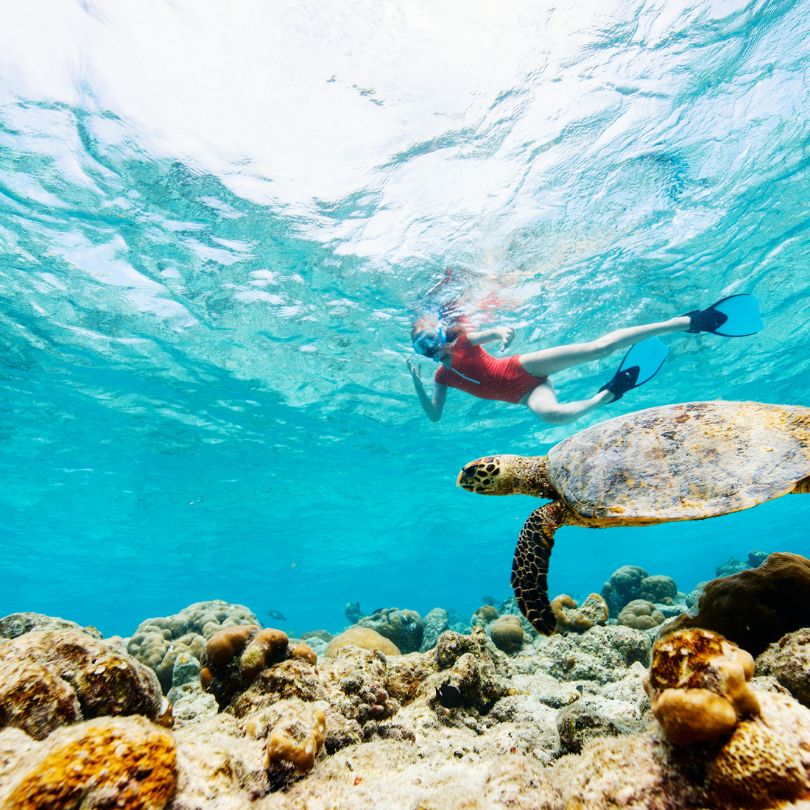
Depending on the location, customers may encounter:
- Sea turtles
- Rays
- Tropical fish
- Dolphins
- Seabirds
- Reef ecosystems
- Mangroves
Useful content can explain:
- What species may be encountered
- When sightings are more common
- Wildlife regulations
- Protected areas
- Responsible behavior
Never guarantee wild-animal encounters.
Wildlife is unpredictable.
Environmental Responsibility as a Marketing Asset
Watersports businesses depend directly on healthy natural environments.
Responsible practices may include:
- Reef-safe operating procedures
- Wildlife-distance rules
- Avoiding sensitive habitats
- Reducing single-use plastic
- Respecting protected zones
- Beach cleanups
- Responsible anchoring
- Environmental education
Avoid vague claims such as:
“We are 100% eco-friendly.”
Explain specific actions instead.
Specificity creates credibility.
Content Marketing for Watersports Businesses
A successful content strategy should answer questions customers genuinely ask.
Useful categories include:
Beginner Content
- Is paddleboarding difficult?
- How many surf lessons do beginners need?
- Can children learn kitesurfing?
Destination Content
- Best watersports in Cancun
- Where to kayak in Tulum
- Best beaches for surfing in Mexico
Seasonal Content
- Best surf season Puerto Escondido
- Best months for kitesurfing
- Water temperature by season
Practical Content
- What to bring to a snorkeling tour
- What to wear paddleboarding
- Do you need a license to jet ski?
Comparison Content
- Kayak vs paddleboard
- Surfing vs kitesurfing
- Private vs group lessons
Every useful article should connect naturally to a relevant commercial page.
Build Topic Clusters Instead of Random Blog Posts
Imagine a kitesurf school.
Its main commercial page might be:
Kitesurf Lessons in [Destination]
Supporting articles could include:
- Best time to kitesurf in [destination]
- Is [destination] good for beginners?
- Private vs group kitesurf lessons
- How many kitesurf lessons do you need?
- What wind speed do beginners need?
All should link back to the lesson page.
This creates topical structure.
The same system works for surfing, diving, kayaking, paddleboarding, snorkeling, and other activities.
People-First Watersports Content
Generic articles are becoming increasingly less useful as a competitive strategy.
Google’s May 2026 guidance for generative AI Search specifically emphasizes valuable, unique, non-commodity content and confirms that established SEO fundamentals remain relevant.
Watersports companies have a natural advantage because they possess firsthand expertise.
Instead of:
10 Benefits of Paddleboarding
publish:
What Beginners Should Know Before Paddleboarding in Bacalar During Windy Season
Instead of:
Why Surfing Is Fun
publish:
Which Puerto Escondido Beaches Are Suitable for Beginner Surf Lessons?
Real experience creates differentiation.
Local Destination Authority
A watersports business should aim to become an online resource for its destination.
Create useful content about:
- Beaches
- Launch areas
- Weather
- Conditions
- Transportation
- Parking
- Accommodation zones
- Restaurants
- Local regulations
- Other activities
Travelers do not experience your company in isolation.
They experience the entire destination.
Helping them plan the destination can introduce your business earlier in the customer journey.
Google Ads for Watersports Businesses
Paid search can complement SEO.
Commercial searches such as:
- jet ski Cancun
- surf lessons Puerto Escondido
- kayak rental Tulum
- paddleboard Miami
- kitesurf lessons Cabarete
may have strong purchase intent.
Ads can capture that demand quickly.
But the landing page must match the advertisement.
Do not advertise:
Beginner Kitesurf Lessons
and send the customer to a generic homepage listing twelve activities.
Send them to the relevant lesson page.
SEO vs. Google Ads
| SEO | Google Ads |
|---|---|
| Builds organic visibility | Buys immediate visibility |
| Requires time to develop | Can launch quickly |
| Strong for educational content | Strong for commercial searches |
| No direct cost per organic click | Paid traffic |
| Builds destination authority | Excellent for seasonal campaigns |
| Can compound over time | Stops when spending stops |
Many operators benefit from using both.
Social Media and Watersports Marketing
Few industries are as visually suited to social media as watersports.
Show:
- Beginner progress
- First waves
- First dives
- Equipment preparation
- Instructor personalities
- Customer reactions
- Weather conditions
- Wildlife
- Behind the scenes
- Safety procedures
Do not publish only polished extreme athletes.
A beginner considering their first lesson may relate much more strongly to another beginner.
User-Generated Content
Customer-created content can provide strong social proof.
Encourage customers to share:
- Photos
- Videos
- Stories
- Reviews
Request permission before reusing content commercially.
Authentic customer experiences can reduce uncertainty for future customers.
Video SEO for Watersports
Video is useful both for social media and search.
Potential topics include:
- What happens during your first surf lesson
- How beginner kitesurf lessons work
- What to expect on a snorkeling tour
- Paddleboard safety basics
- How we choose the day’s training location
Host substantial videos where appropriate and embed them into relevant website pages.
The video should support the page rather than simply decorate it.
WhatsApp as a Conversion Tool
WhatsApp works particularly well in tourism-heavy destinations.
Customers can quickly ask:
- Do you have space today?
- Is this suitable for children?
- What time does the tour leave?
- Is pickup included?
- What happens if it rains?
Use WhatsApp to accelerate conversion.
But do not force customers to ask for basic information that should already appear on the website.
Online Booking Systems
Customers increasingly expect immediate availability.
A booking engine should make it easy to:
- Select activity
- Choose date
- Select time
- Enter participants
- Add extras
- Pay deposit
- Receive confirmation
Test the entire process.
Particularly on mobile.
A broken calendar can destroy the value of an otherwise successful marketing campaign.
Conversion Rate Optimization for Watersports
Small improvements can have large commercial effects.
Test:
- CTA text
- Pricing visibility
- Reviews near booking buttons
- Mobile layouts
- Photos
- FAQs
- Booking form length
- Payment options
The objective is not to manipulate customers.
It is to remove unnecessary friction.
Trust Signals That Increase Watersports Bookings
Adventure activities involve risk.
Customers want evidence of professionalism.
Useful signals include:
- Instructor certifications
- Safety procedures
- Equipment quality
- Years operating
- Insurance information where relevant
- Real reviews
- Crew profiles
- Professional photos
- Cancellation policies
- Emergency procedures
Do not simply claim:
“We are the safest company.”
Explain why customers can trust you.
Pricing Transparency
Clear pricing increases confidence.
Explain whether rates are:
- Per person
- Per board
- Per hour
- Per lesson
- Per boat
- Per group
Also explain possible extra fees.
For example:
- Marine park fee
- Transportation
- Equipment rental
- Insurance
- Fuel
- Photography
Hidden charges damage trust.
OTA vs. Direct Booking Strategy
Third-party marketplaces can help distribute watersports products.
They provide:
- Large audiences
- Brand recognition
- Easy booking
But they also reduce control.
A balanced strategy uses marketplaces while building direct channels.
| OTA | Direct Booking |
|---|---|
| Large audience | Operator owns relationship |
| Easy discovery | Better customer data |
| Commission may apply | More revenue retained |
| Platform controls listing | Full brand control |
| Strong platform trust | Operator must build trust |
The objective should be channel balance rather than complete dependence on either side.
Multilingual Watersports Marketing
International watersports destinations often attract travelers from multiple countries.
Relevant languages might include:
- English
- Spanish
- French
- German
- Italian
- Portuguese
Do not simply copy text into automated translation tools and assume the SEO work is complete.
Each language should have:
- Natural terminology
- Correct keywords
- Accurate prices
- Correct internal links
- Localized metadata
- Correct booking information
- Proper hreflang implementation
Keyword behavior changes by language.
Research each market.
Link Building for Watersports SEO
Useful backlinks may come from:
- Hotels
- Resorts
- Hostels
- Tourism boards
- Travel publications
- Watersports associations
- Equipment brands
- Local businesses
- Festivals
- Training agencies
- Travel bloggers
A relevant recommendation from a local resort is generally more strategically useful than dozens of random directory links.
Build real relationships.
Links often follow.
Internal Linking for Watersports Websites
Internal links help visitors and search engines understand the relationship between pages.
For example:
Best Time to Surf in Puerto Escondido
↓
Beginner Surf Lessons Puerto Escondido
↓
Book Your Lesson
Another:
Kayak vs Paddleboard: Which Is Better for Beginners?
↓
Kayak Tours
and
Paddleboard Rentals
Use descriptive anchor text rather than repeatedly writing:
click here
Technical SEO for Watersports Websites
Technical SEO creates the foundation.
Important areas include:
- HTTPS
- XML sitemap
- Correct indexing
- Canonicals
- Redirects
- Broken links
- Mobile usability
- Fast pages
- Crawlable navigation
- Structured internal linking
Technical improvements should support commercial pages rather than becoming an endless optimization project.
Structured Data for Watersports Companies
Depending on the website, useful structured data may include:
- Organization
- LocalBusiness
- BreadcrumbList
- Article
- VideoObject
Use markup only when it accurately represents visible page information.
Structured data is not a substitute for good content.
Watersports Marketing in AI Search
Search now includes more AI-assisted experiences.
Google’s 2026 guidance states that traditional SEO best practices remain relevant for AI-powered Search and recommends focusing on clear technical foundations and unique, expert-led content rather than chasing supposed “AEO/GEO hacks.”
This creates a significant opportunity for specialized watersports businesses.
Real operators know things generic travel sites cannot easily reproduce:
- Which beach works with which wind
- What conditions beginners need
- How currents change
- Which equipment works locally
- What customers commonly misunderstand
- How seasons affect each activity
Publish that knowledge.
Google also rolled out dedicated generative-AI visibility reporting in Search Console globally by August 31, 2026, giving site owners another way to monitor how their sites appear within Google’s generative Search features.
Measuring Watersports Marketing Performance
Do not judge marketing only by follower counts.
Measure outcomes.
| KPI | What It Measures |
|---|---|
| Organic clicks | SEO reach |
| Non-branded searches | New discovery |
| Google Maps actions | Local demand |
| Service-page visits | Commercial interest |
| Booking starts | Purchase intent |
| Completed bookings | Revenue conversion |
| WhatsApp inquiries | Leads |
| Conversion rate | Website performance |
| Average booking value | Revenue quality |
| Direct booking share | Channel independence |
| Review growth | Reputation |
| Repeat customers | Retention |
The most important question is:
Which channels create profitable bookings?
Track Revenue by Activity
Do not combine everything into one overall metric.
Compare:
- Surf lessons
- Kitesurf lessons
- Paddleboards
- Kayak tours
- Snorkeling
- Jet skis
One activity may drive large traffic but little revenue.
Another may produce fewer visits but high-value bookings.
Marketing decisions should reflect profitability.
Track Revenue by Landing Page
Consider:
Article A
10,000 organic visits.
20 bookings.
Article B
1,000 organic visits.
40 bookings.
Article B generates less traffic but more commercial value.
SEO reporting should include revenue, leads, and bookings—not only traffic.
Common Watersports Marketing Mistakes
Depending Entirely on Instagram
Social media creates awareness.
It does not replace search demand.
Ignoring Google Maps
Local customers frequently use Maps to compare nearby operators.
Hiding Pricing
Customers often leave when they cannot understand approximate costs.
Publishing Generic Content
Generic travel articles rarely demonstrate expertise.
Creating Thin Location Pages
Changing only a city name does not create meaningful local content.
Ignoring Mobile Booking
Most traveling customers use phones.
Uploading Oversized Media
Beautiful imagery should not make the website unusable.
Ignoring Weather Questions
Customers care about conditions.
Answer them.
Publishing Only During Peak Season
SEO planning should begin earlier.
Tracking Traffic Instead of Revenue
Traffic is a means.
Bookings are the business outcome.
Practical Watersports Marketing Action Plan
Step 1: Identify Your Most Valuable Activities
Rank activities by:
- Revenue
- Margin
- Capacity
- Seasonality
- Demand
Step 2: Define the Customer
Separate:
- Beginners
- Experienced participants
- Families
- Couples
- Groups
- Certified divers
- Travelers already in destination
Step 3: Research Search Intent
Identify:
- Commercial keywords
- Local keywords
- Seasonal searches
- Beginner questions
Step 4: Build Strong Service Pages
Create one strong page for each major activity.
Step 5: Optimize Google Business Profile
Improve local information, photos, services, and reviews.
Step 6: Improve Booking UX
Test:
- Mobile
- Calendar
- Pricing
- Payments
Step 7: Build Destination Content
Publish useful local expertise.
Step 8: Create Seasonal Content
Begin before peak demand.
Step 9: Connect Content With Services
Use internal links.
Step 10: Build Reviews
Create a systematic post-experience review process.
Step 11: Add Paid Search Where Appropriate
Target high-intent demand.
Step 12: Measure Revenue
Connect marketing channels with bookings.
A 90-Day Watersports Marketing Plan
Days 1–30: Foundation
Audit:
- Website
- SEO
- Google Business Profile
- Reviews
- Booking system
- Analytics
- Mobile UX
Fix critical conversion problems.
Days 31–60: Visibility
Improve:
- Service pages
- Destination content
- Local SEO
- Internal linking
- Review acquisition
Publish high-priority seasonal pages.
Days 61–90: Conversion
Analyze:
- Traffic
- Calls
- Booking starts
- Completed bookings
Improve weak points.
Then expand content based on real customer behavior.
Frequently Asked Questions About Watersports Marketing
What is Watersports Marketing?
Watersports Marketing is the strategy used to attract and convert customers for activities such as surfing, kitesurfing, kayaking, paddleboarding, snorkeling, diving, jet skiing, sailing, and other water-based experiences.
Why is SEO important for watersports businesses?
Travelers actively search for activities, destinations, weather, prices, lessons, and rentals. SEO allows the business to appear during those decisions.
Why is local SEO important?
Most watersports businesses operate from a physical destination. Google says local search visibility is primarily determined by relevance, distance, and prominence.
What content should a watersports company publish?
Prioritize useful topics:
- Seasons
- Weather
- Beginner guides
- Prices
- Safety
- Equipment
- Locations
- Comparisons
- Destination planning
Should a watersports company show prices online?
In most cases, customers benefit from pricing transparency.
If rates vary, explain the pricing structure clearly.
Is Instagram enough for watersports marketing?
No.
Social media can create awareness, but SEO and local search capture customers actively looking for activities.
Should watersports businesses use Google Ads?
Paid search can work particularly well for high-intent searches and seasonal campaigns.
It should usually lead to dedicated service pages rather than the homepage.
How early should seasonal marketing begin?
Ideally before customers begin researching the peak season. SEO, destination content, partnerships, and seasonal pages should be prepared ahead of demand.
Are reviews important for local SEO?
Yes. Google says reviews and positive ratings can contribute to local prominence, alongside relevance, distance, links, and other signals.
Does AI change SEO for watersports businesses?
The fundamentals remain relevant. Google’s 2026 guidance recommends strong technical SEO and distinctive, valuable, expert-led content for both traditional and generative Search experiences.
Final Thoughts: Watersports Marketing Should Connect Search With Bookings
Successful Watersports Marketing is not about being visible everywhere.
It is about being visible at the right moments.
A traveler researching an activity needs education.
A traveler comparing operators needs trust.
A traveler already in the destination needs local visibility.
A traveler ready to purchase needs a simple booking experience.
That means watersports businesses should connect:
SEO
with
Local Search
with
Conversion Optimization
rather than treating them as separate projects.
SEO brings qualified customers into the website.
Google Maps captures immediate local demand.
Useful destination content builds authority.
Reviews reduce uncertainty.
Weather and seasonal information demonstrate expertise.
Mobile UX removes friction.
A strong booking system converts interest into revenue.
And an excellent experience creates the reviews, referrals, customer content, and repeat business that strengthen the next marketing cycle.
Google’s current search guidance reinforces this direction: useful, unique, people-first information remains central, local results continue to depend heavily on relevance, distance, and prominence, and the same SEO foundations now support visibility in generative AI Search as well.
Watersports operators already possess the raw material for strong marketing:
local knowledge, instructors, equipment expertise, weather experience, destination knowledge, safety systems, and thousands of real customer questions.
The opportunity is to transform that knowledge into a digital presence that travelers can discover, understand, trust, and book directly.
That is what turns Watersports Marketing from promotion into a sustainable customer-acquisition system.


 Spanish
  English
  French